Deep in the heart of Huelva’s Doñana National Park lies a village that, for most of the year, feels like a quiet film set from an old Western. But as Pentecost approaches, the sandy streets of El Rocío transform into the epicentre of Spain’s most passionate spiritual and cultural display.
The Romería del Rocío is more than just a pilgrimage; it is a sensory explosion of flamenco, brotherhood, and unwavering faith. Here is everything you need to know about the journey.
Key Dates for your 2026 Calendar:
|
The origins of the El Rocío pilgrimage
The origins of the El Rocío pilgrimage are steeped in the misty legends of the 13th century, a time when the marshes of the Guadalquivir were a wild, untamed frontier. Tradition tells of a local hunter from the village of Almonte who discovered a carved wooden statue of the Virgin Mary hidden in a hollow tree trunk within the dense thickets of the Doñana. The discovery was seen as divine, and a small hermitage was soon erected on the spot. Over the centuries, what began as a humble local devotion blossomed into a massive cultural phenomenon, eventually drawing brotherhoods from every corner of Spain and beyond to this remote corner of the Huelva province.
The journey itself, known as a Camino, is a gruelling yet celebratory passage through some of Europe’s most protected landscapes. Pilgrims travel on foot, on horseback, or in traditional “charret” wagons covered in white lace and brightly coloured flowers. These caravans move to the rhythm of the flauta and tamboril, crossing the salt marshes and pine forests of Doñana.
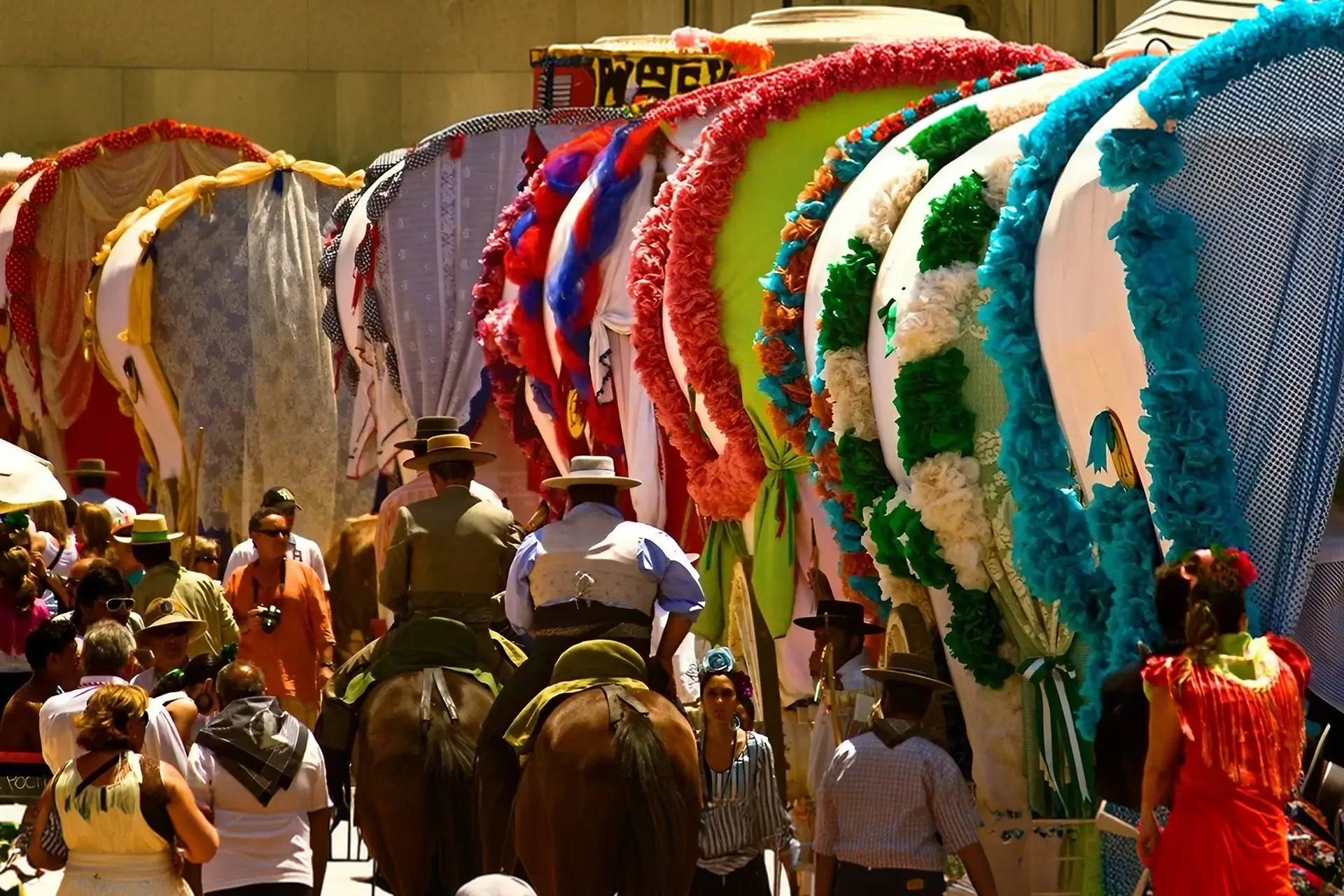
The transition from the modern world into this ancient landscape is profound; as the pavement ends and the sandy tracks begin, the pace of life slows to the speed of the oxen pulling the carts. It is a journey defined by “La Pará”—the scheduled stops where brotherhoods gather to share wine, sing and offer prayers in a communal atmosphere that blurs the line between a religious rite and a folk festival.
Upon reaching the village of El Rocío, the atmosphere shifts from the dusty solitude of the trail to a vibrant, bustling encampment. Unlike typical Spanish villages, El Rocío has no paved streets; the ground is entirely sand, designed to accommodate the thousands of horses that descend upon it during the Pentecost weekend. The houses belonging to the various Hermandades (brotherhoods), serve as social hubs where the doors are perpetually open. This architecture of hospitality is central to the event – no one is a stranger during the pilgrimage.
The climax of the event, the Salto de la Reja, is one of the most raw and visceral displays of faith in the Christian world. In the early hours of Pentecost Monday, the men of Almonte scale the iron railings surrounding the altar. There is no fixed time for this; it happens only when the collective spirit of the crowd reaches its breaking point. They shoulder the heavy silver float of the “Paloma Blanca” (the White Dove) and carry her through the streets, stopping at every brotherhood house so the pilgrims can touch the mantle and receive a blessing.
The call of the Camino
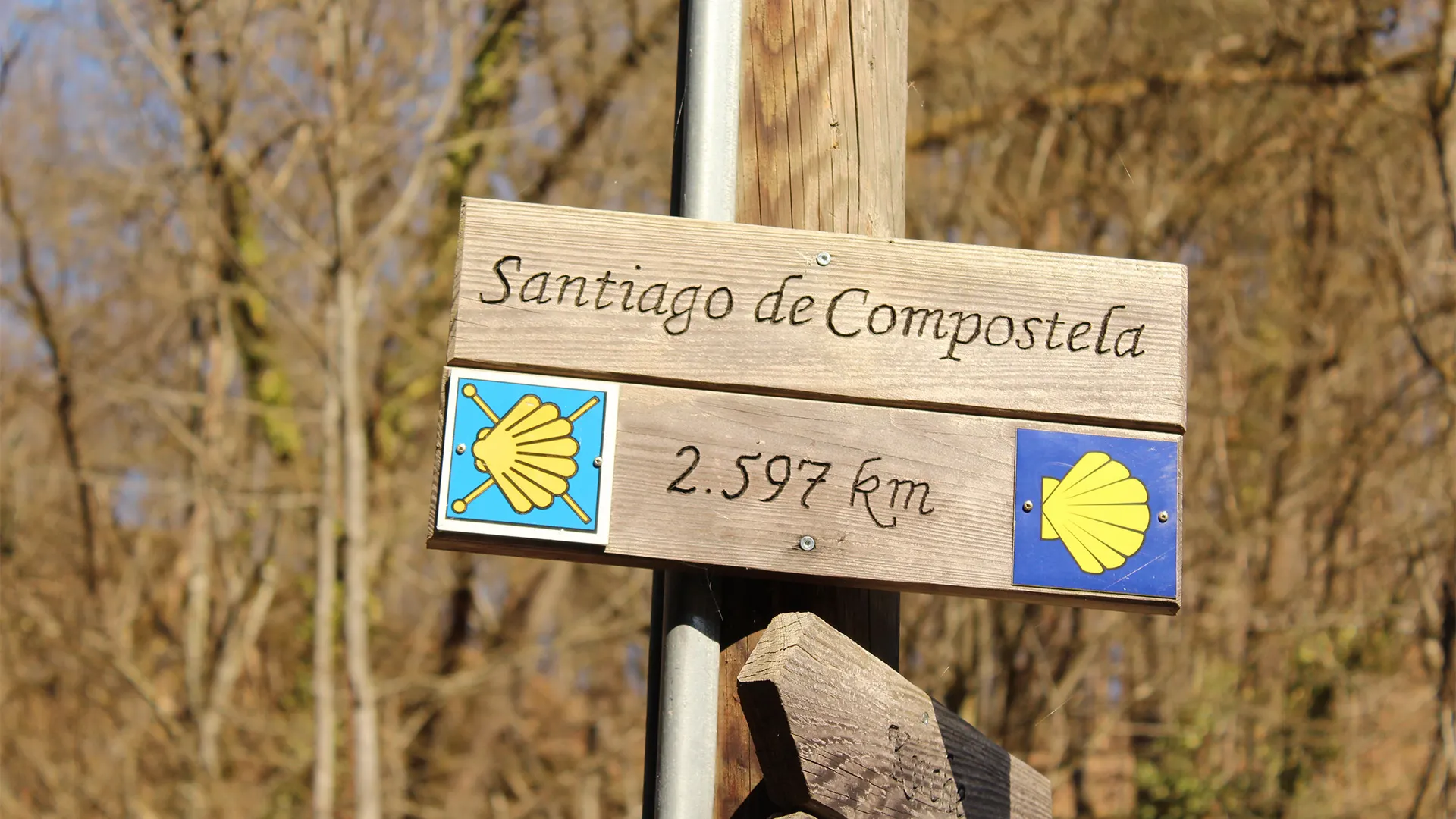
For many, this experience sparks a deeper desire to explore Spain’s other great spiritual arteries. While El Rocío is a concentrated burst of Andalucian fervour, the Camino de Santiago offers a different kind of introspection.
At TOMA & COE, we specialise in bridging these different styles of pilgrimage. Whether you are moved by the more raucous festive devotion of El Rocío or the quieter trails leading to the Cathedral of Santiago de Compostela, the act of walking with purpose remains the same.
Finding Balance: pilgrimage and wellness
Modern pilgrimage is evolving. While traditional routes focus on the destination, many travellers now seek a journey that nourishes both the soul and the body.
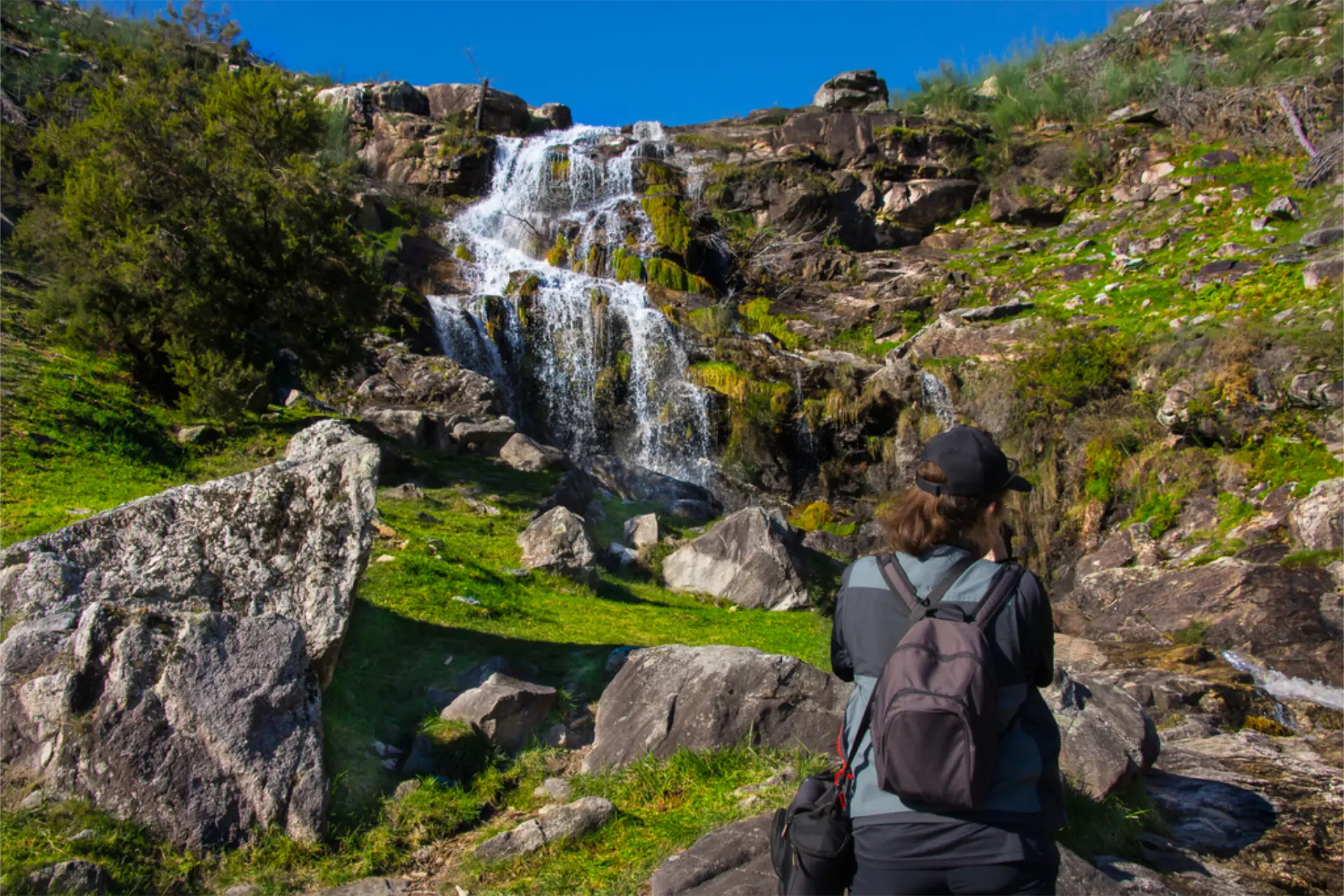
To cater for this, we offer curated Camino de Santiago routes that can be integrated with yoga and mindfulness. Imagine a day spent traversing the rolling hills of Galicia, followed by a guided yoga session to stretch the limbs and a meditation to process the day’s experiences. It turns a physical challenge into a holistic retreat.
Discover our Camino with yoga tours
Crafting your bespoke journey
The beauty of El Rocío, and indeed the Camino, is that no two experiences are the same. Some travellers want to be in the heart of the “Salto de la Reja” crowd, while others prefer to witness the brotherhoods crossing the Guadalquivir river in a more private setting.
TOMA & COE excels in creating bespoke tours tailored to your specific interests. Whether you want to
- coordinate a private visit to the El Rocío sanctuary
- combine a cultural tour of Huelva with a multi-day hike on the Camino, or
- incorporate luxury accommodation and gourmet Andalusian cuisine into your spiritual trek,
we handle the logistics, the local insights, and the hidden details. This allows you to focus entirely on the path ahead.
Ready to start your journey? Whether you are drawn to the dust of Doñana or the green peaks of the north, let us help you find your way. Contact TOMA & COE today to begin planning your custom pilgrimage.