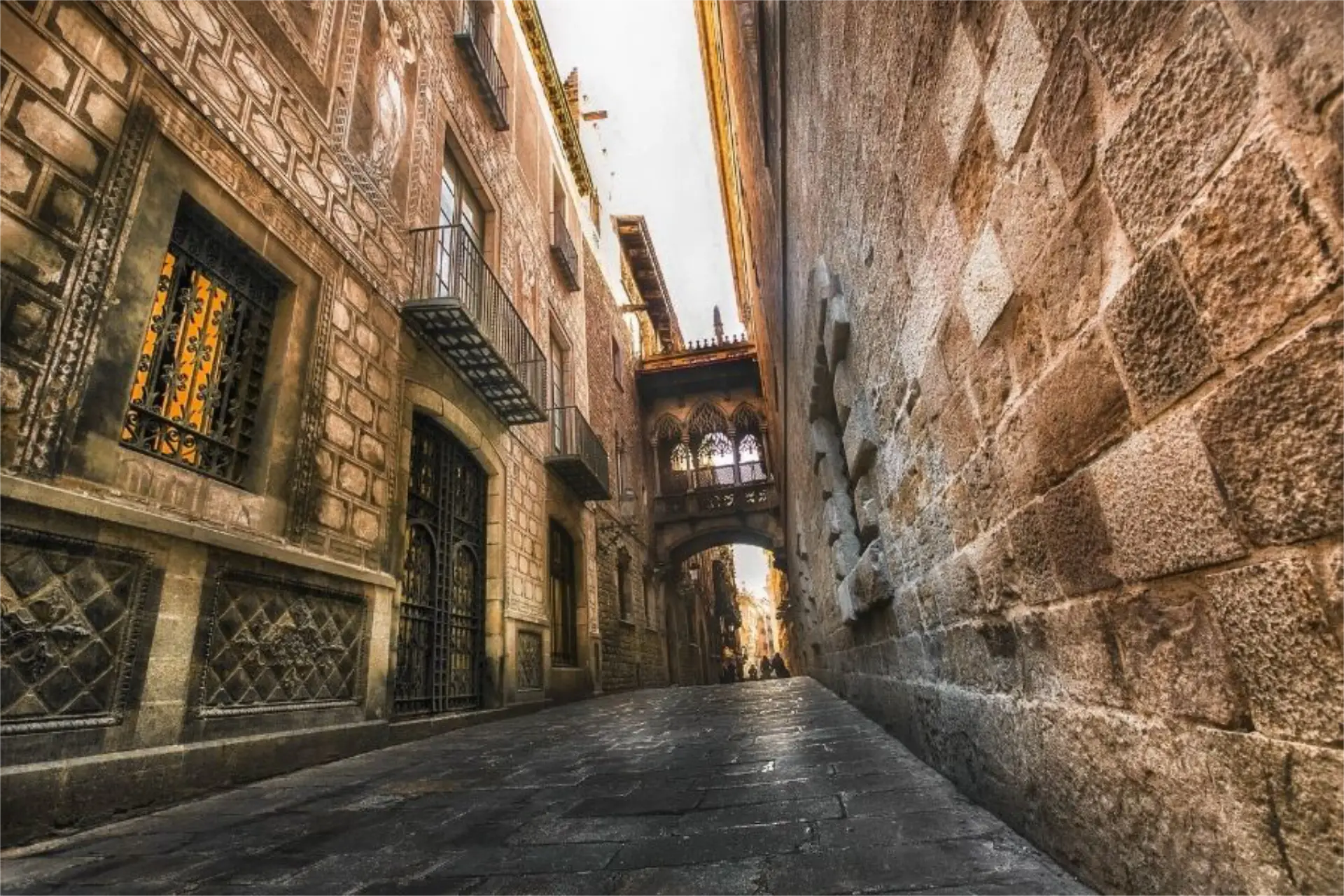
A 500-year-old itinerary blueprint for slow travel in Andalucía
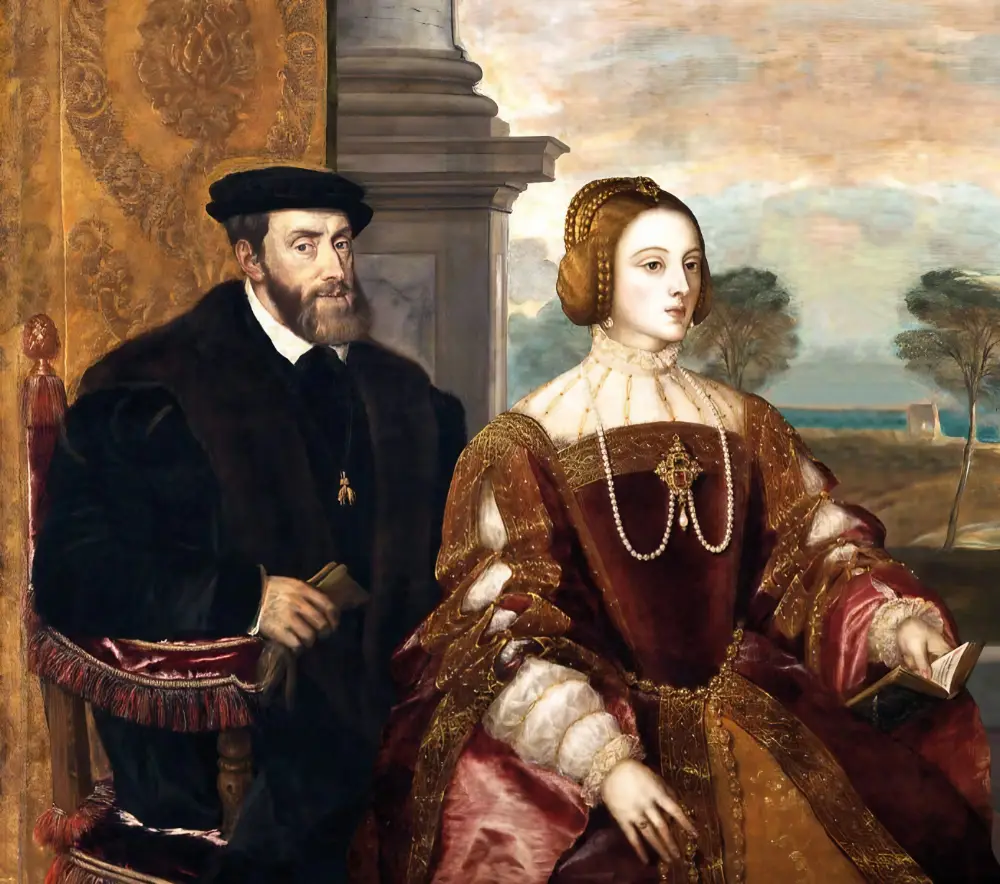
In the spring of 1526, the most powerful man in the world stopped rushing. He had an empire to govern, a pope to placate, wars to fund and a Protestant problem that was rapidly becoming everyone’s problem. And yet, for the better part of a year, Charles V — Holy Roman Emperor, King of Spain, master of half the known world — did something that his advisors could not quite believe; he stayed.
He had, of course, a very good reason. Her name was Isabella of Portugal, and she had married him just after midnight on 11 March 1526 in the candlelit Salon de Embajadores of Seville’s Real Alcázar. A Portuguese diplomat, watching the newlyweds in the days that followed, wrote home with barely concealed astonishment. “When the bride and groom are together, though everyone may be present, they have eyes only for one another.”
What followed was not merely a honeymoon. It was one of the great slow journeys in European history, a months-long procession through the olive groves, walled towns and palatial gardens of Andalucía, at a pace that the modern world has almost entirely forgotten how to keep. From Seville to Carmona, from Carmona to Córdoba, from Córdoba through the white villages south to Granada, the imperial couple wound their way through landscapes that had barely changed since the Moorish caliphate, pausing to feast, to negotiate, to fall deeper in love.
In 2026, five hundred years on, their route is being commemorated. It is a once-in-a-generation moment. And it raises a question that every traveller to Andalucía should ask themselves: what would it feel like to take that journey today?
Why 2026 is different
This year, the Andalusian Centre for Studies (CENTRA) has launched a dedicated lecture and tour series marking the Fifth Centenary: “1526: The Honeymoon of Charles V and Isabella of Portugal.” Running through May and into summer, it takes in Carmona, Córdoba, Alcaudete and Santa Fe — the precise waypoints of the imperial procession — with historians, architects and cultural experts bringing each stop alive with fresh research and, in some cases, access to spaces rarely open to the public.
It is not a tourist trail. It is a scholarly celebration of one of the most remarkable journeys ever made through southern Spain — and an invitation to follow in its wake with more time, more curiosity and considerably more comfort than the imperial entourage enjoyed.
At TOMA & COE, we think that is an invitation worth accepting. Better still, we think it deserves to be the foundation of something that fits you perfectly — a bespoke tour built around the Emperor’s route, shaped by your own interests, paced to your own rhythm.
The Journey: Stop by Stop
Seville: Where it began
Isabella arrived in Seville in early March 1526, carried in a litter covered in cloth of gold, met at the Macarena gate by the Duke of Arcos and the full weight of the city’s ceremony. Charles followed a week later. They married in the Alcázar, a palace already layered with seven hundred years of history, and they stayed for weeks.
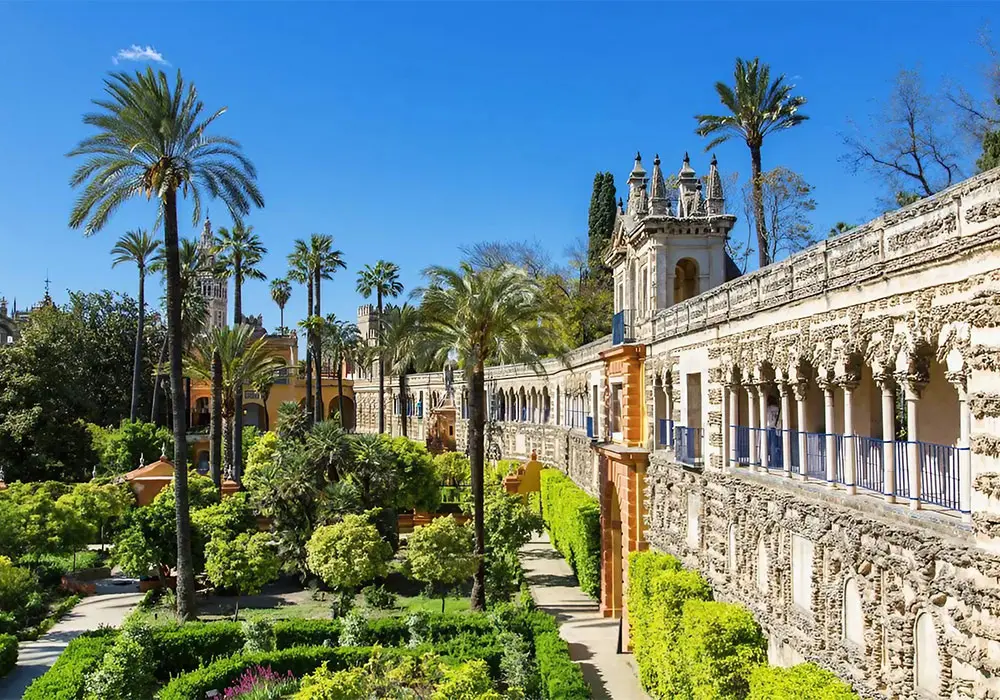
For the slow traveller, Seville is not a city to pass through. It is a city to inhabit — to lose an afternoon in the Barrio de Santa Cruz, to find the corner of the Alcázar gardens where the light falls just so, to eat dinner at ten and feel the city finally exhale. Two nights is not enough. Three is a beginning.
Carmona: The First Escape
The road from Seville to Córdoba passes through Carmona, a hilltop town of extraordinary dignity perched above the Guadalquivir plain. In 1526, it was the first proper halt after the wedding city; a place to breathe, to be away from the courtiers and ambassadors, to look back across the flatlands toward Seville in the evening light.
The Parador de Carmona occupies a fourteenth-century fortress on the town’s highest point, its crenellated walls looking out over the same landscape that Charles and Isabella would have crossed. Staying here is not a compromise; it is a statement of intent. Dinner in the vaulted dining room, a walk along the Roman necropolis at dusk, the particular silence of a town that has been waking and sleeping on this hill for three thousand years — this is what slow travel actually means.
Córdoba: the heart of the world
From Carmona, the route follows what was already an ancient road east to Córdoba. Charles and Isabella spent five days here.

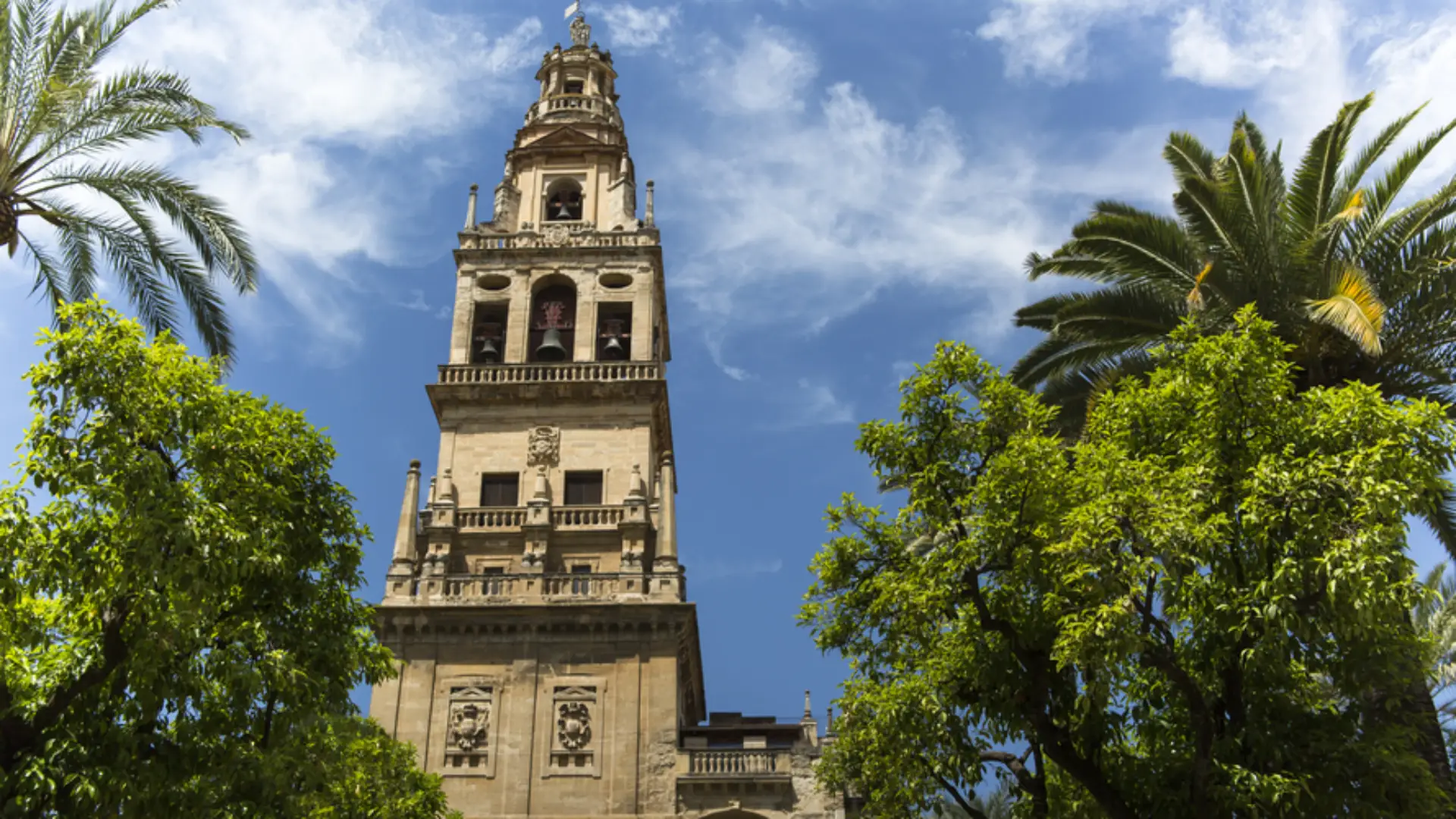
For them, Córdoba was a pause within the pause. For the slow traveller, it should be the same. The Mezquita repays repeated visits. Its forest of red-and-white arches shifting from mystery to grandeur to something approaching the sacred as the light changes. The Jewish quarter, the Judería, holds narrow streets and courtyards glimpsed through iron grilles that have barely changed since the caliphate. The silversmiths of the Calle de las Flores have been working here for centuries; a visit to one of the workshops is an hour spent in living history.
Alcaudete: The hidden waypoint
This is the stop that the guidebooks miss, and that makes it the most interesting one.
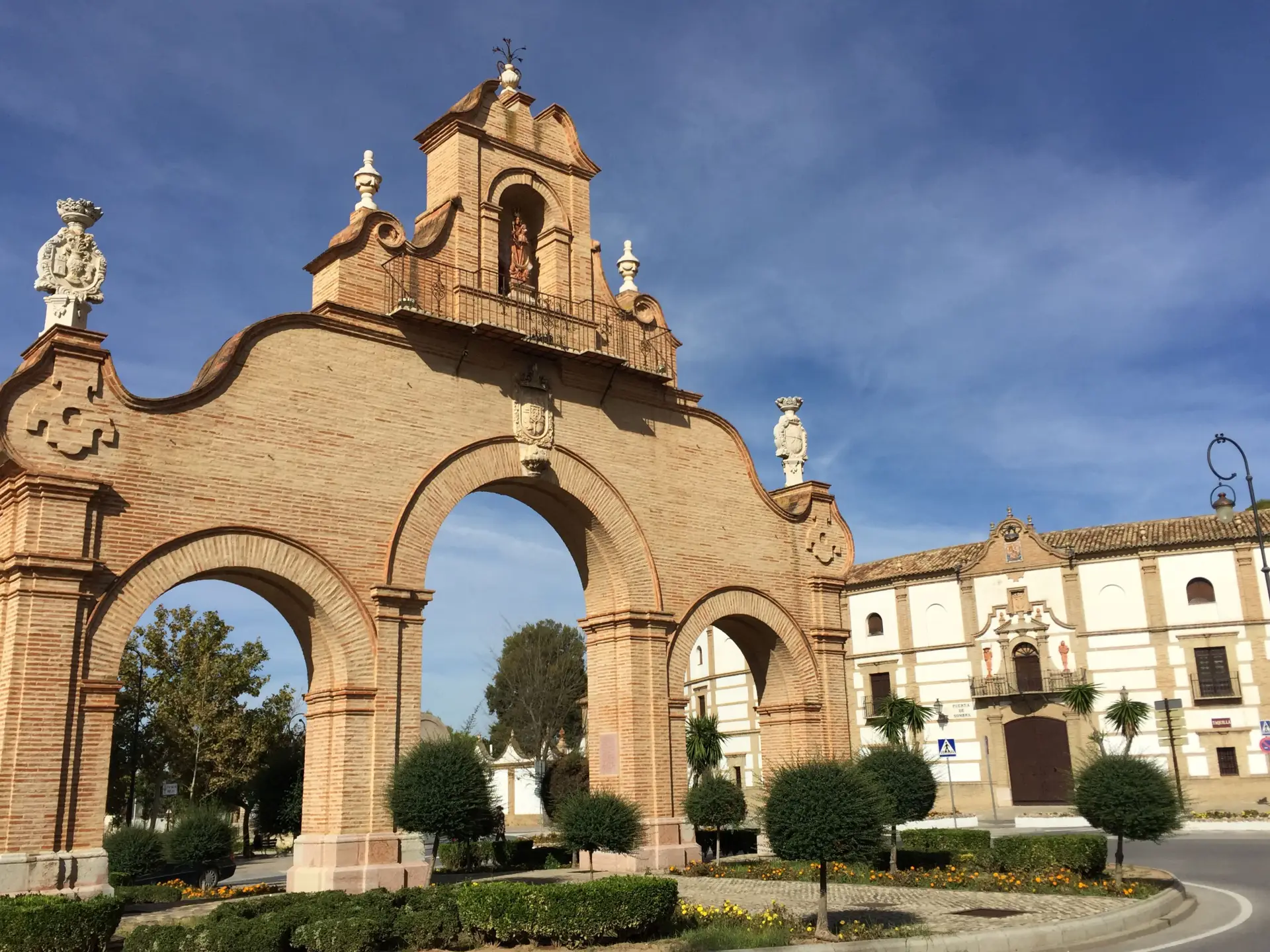
South of Córdoba, the road climbs into the Subbética, a landscape of olive groves and limestone hills that stretches toward the kingdom of Granada. Alcaudete sits above it all, its Calatrava castle rising from the ridge like a statement of territorial intent. The Knights of Calatrava, the great military order, held this frontier for centuries against the Nasrid kingdom to the south. When Charles and Isabella passed through here in 1526, the Reconquista was barely thirty years in the past. The castle must have felt like a monument to very recent history.
It still does. There are no tourist buses here. The olive oil produced in the surrounding groves — some of Spain’s finest — is pressed in mills that have stood for generations. A morning in Alcaudete, a tasting at one of the local producers, lunch at a restaurant where the menu changes with what arrived that morning: this is the Andalucía that the cities cannot give you.
Santa Fe: The gateway
A small, grid-plan town southwest of Granada, Santa Fe carries a weight of history entirely out of proportion to its size. It was built as a military encampment by Ferdinand and Isabella during the siege of Granada and it was here, in 1492, that Columbus received his commission to sail west.
For Charles and Isabella in 1526, passing through Santa Fe meant crossing the threshold into a different world: the former kingdom of Granada, still adjusting to Christian rule, still palpably Moorish in character and architecture. The Sierra Nevada rose ahead of them, snow-capped even in late spring. The Alhambra waited on its hill.
Granada: Where love became legend
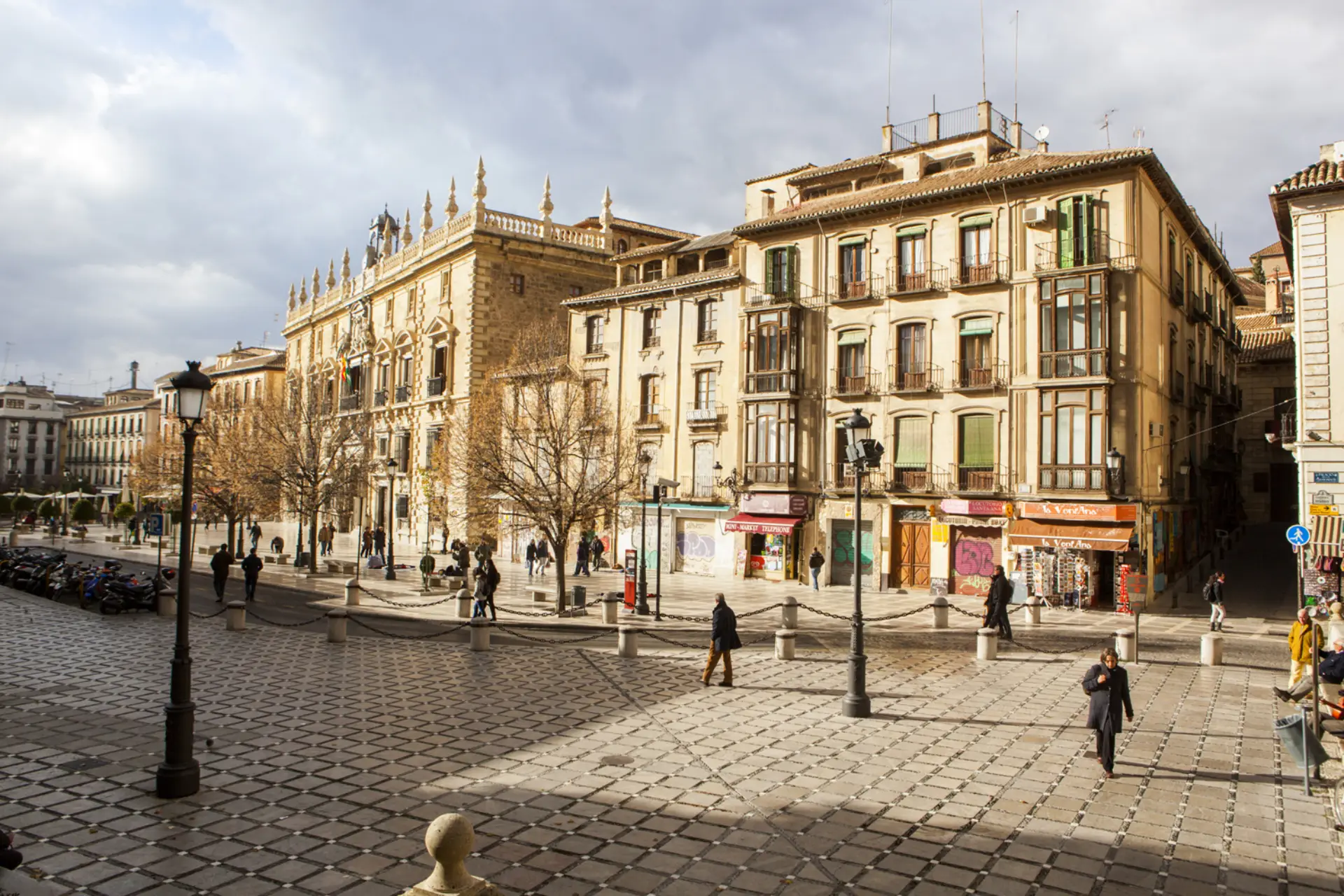
They honeymooned for months at the Alhambra in Granada. That single sentence contains more history than most buildings manage in a lifetime.
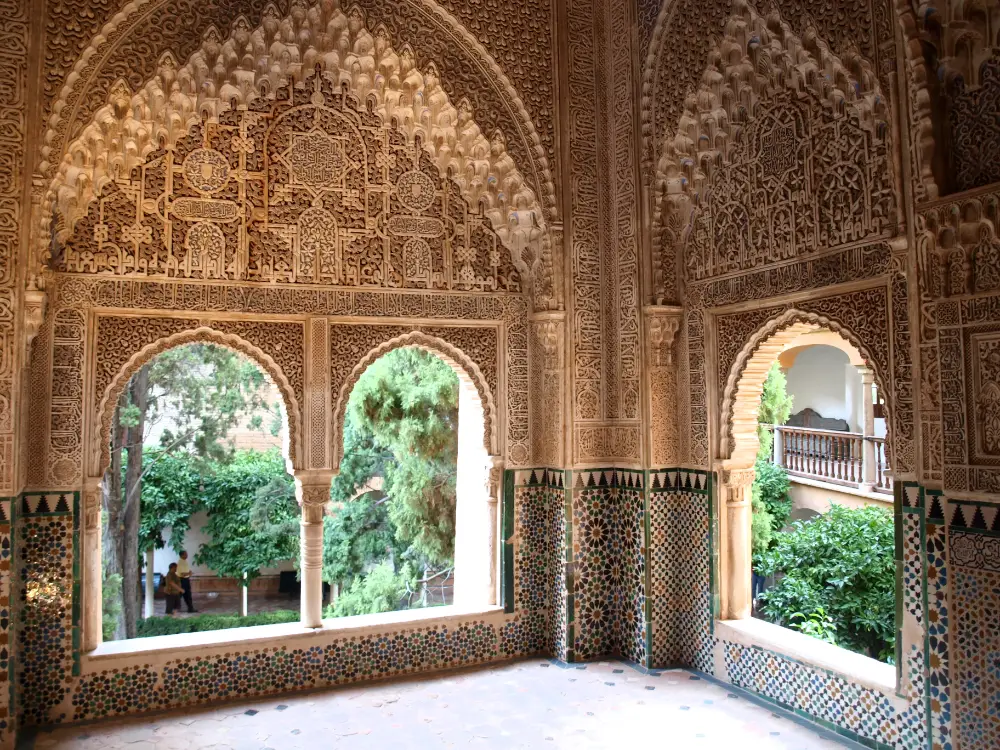
Charles was so enchanted by the place — and by his wife’s enchantment with it — that he commissioned a new palace within the Alhambra precincts, a circular Renaissance jewel set incongruously among the Nasrid rooms. Isabella was so moved by the gardens of the Mirador de Lindaraja that Charles ordered seeds brought from Persia to be planted there. The mystery plants flowered red: carnations, never before seen in Spain, filling the Alhambra gardens with a colour that had no name yet in Castilian.
Their first child, the future Philip II, was conceived here. The future of the Spanish empire began in these rooms, in these gardens, with those flowers.
There is no adequate way to rush the Alhambra. Most visitors try. An hour in the Nasrid Palaces, a photograph of the Generalife, a glass of something cold at the gate and back on the coach.
Your route. Your pace. Your story.
The journey can take around ten days. That is, coincidentally, close to the minimum that Charles and Isabella spent on the road between Seville and Córdoba. They took their time.
At TOMA & COE, the bespoke tour is not a variation on a standard itinerary. It is a conversation. Some clients may want to follow the Emperor’s route exactly, stopping where he stopped, sleeping in historic paradors, and eating in restaurants that their guides have been visiting for years. Others may want the route as a spine, adding their own chapters: a day walking in the Subbética, a private silversmithing workshop in Córdoba, a dawn visit to the Alhambra before the first tour group arrives.
The honeymoon angle is not merely historical colour. Couples who have travelled with us have found it quietly transformative, spending days moving slowly through one of the most beautiful landscapes in Europe. It is not a bad way to mark a beginning, or a milestone, or simply a decision to travel differently.
After that, it is just history. This year, it is still an occasion.
Interested in building your own imperial itinerary? TOMA & COE designs private bespoke tours throughout Andalucía.
Whether your starting point is a five-hundred-year-old love story, a passion for Mudéjar architecture, a taste for the region’s olive oils and sherries, or simply the desire to move through southern Spain at a pace that lets it actually land.
Get in touch and tell us where you want to begin.