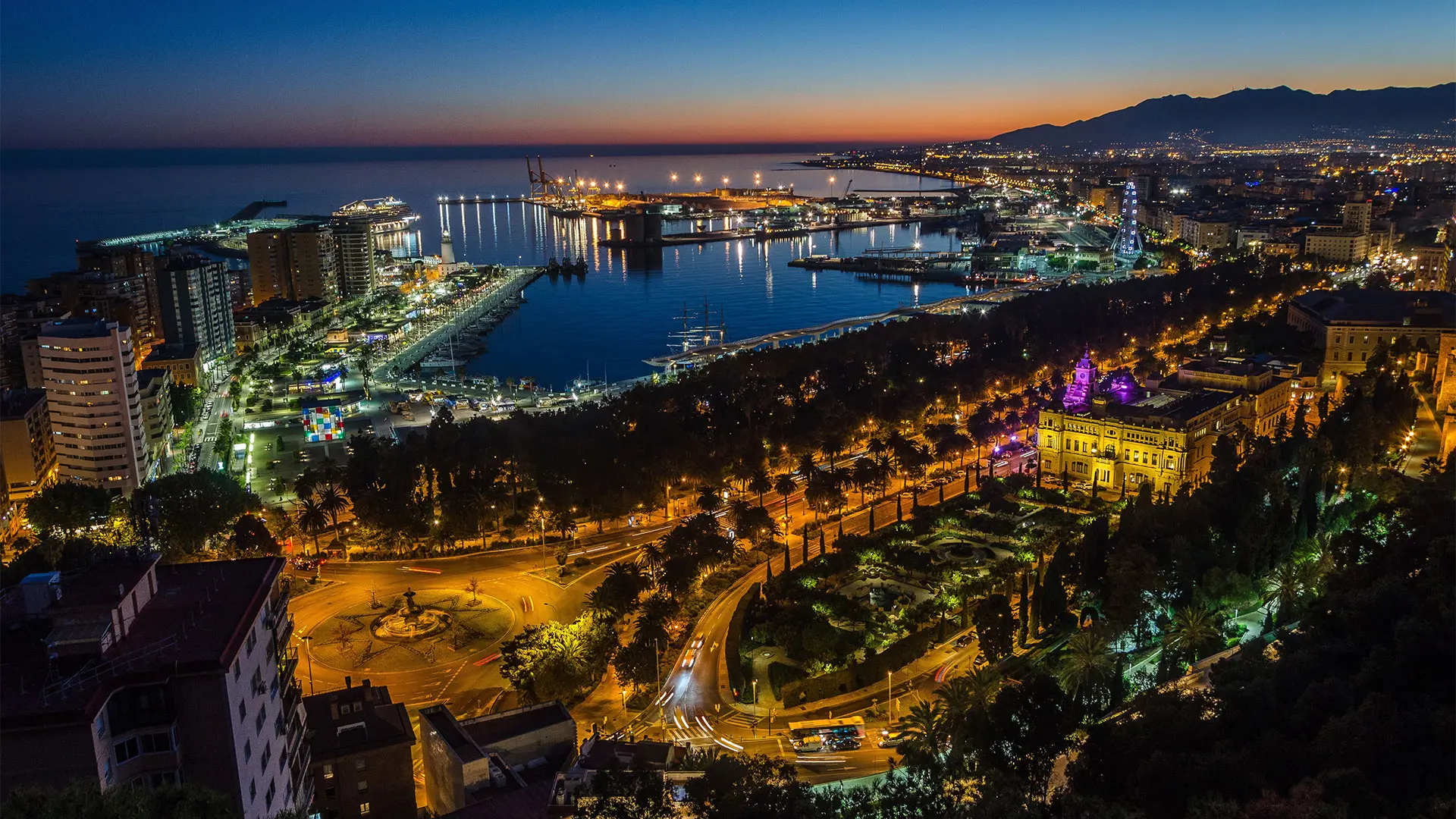
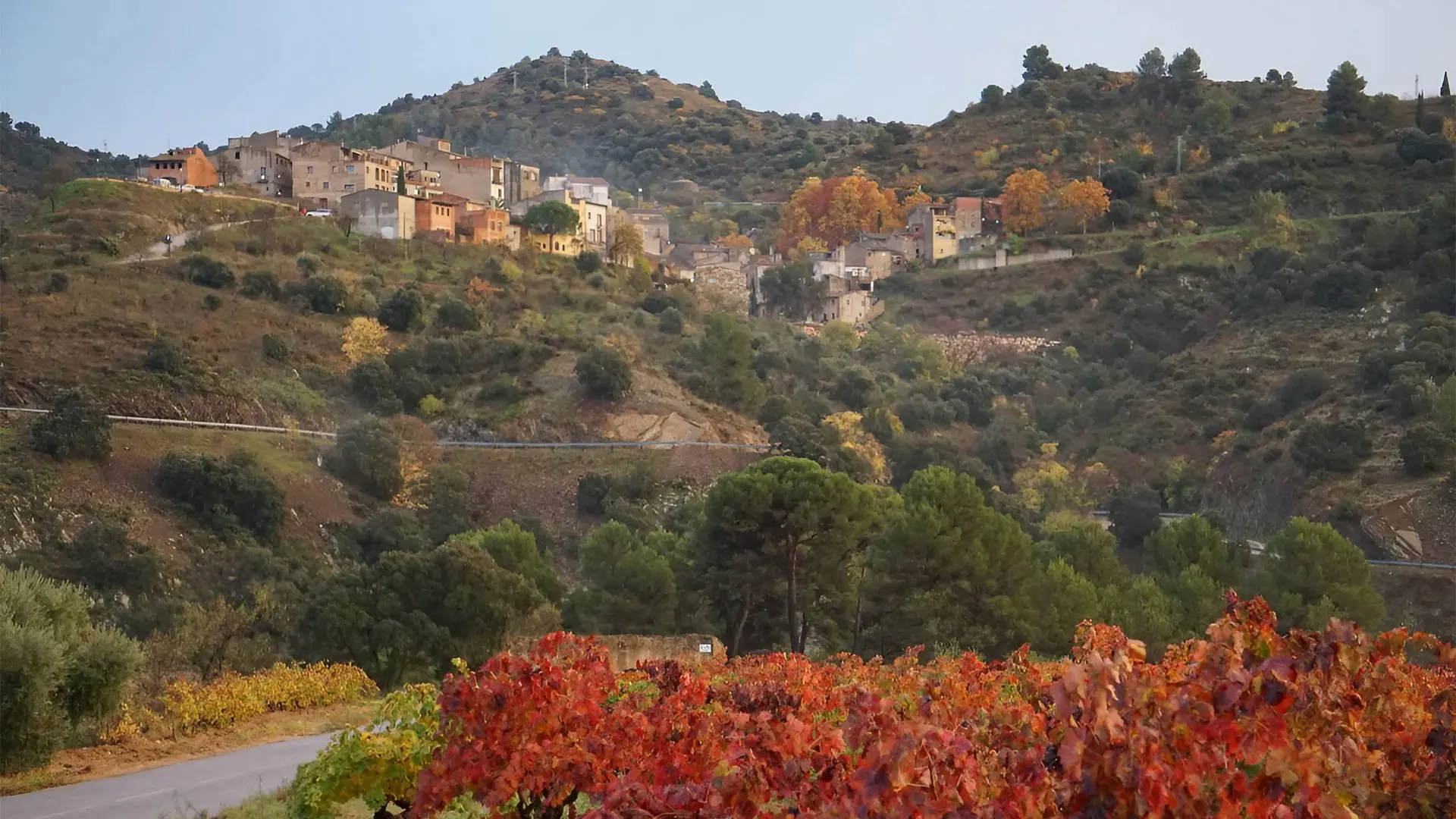
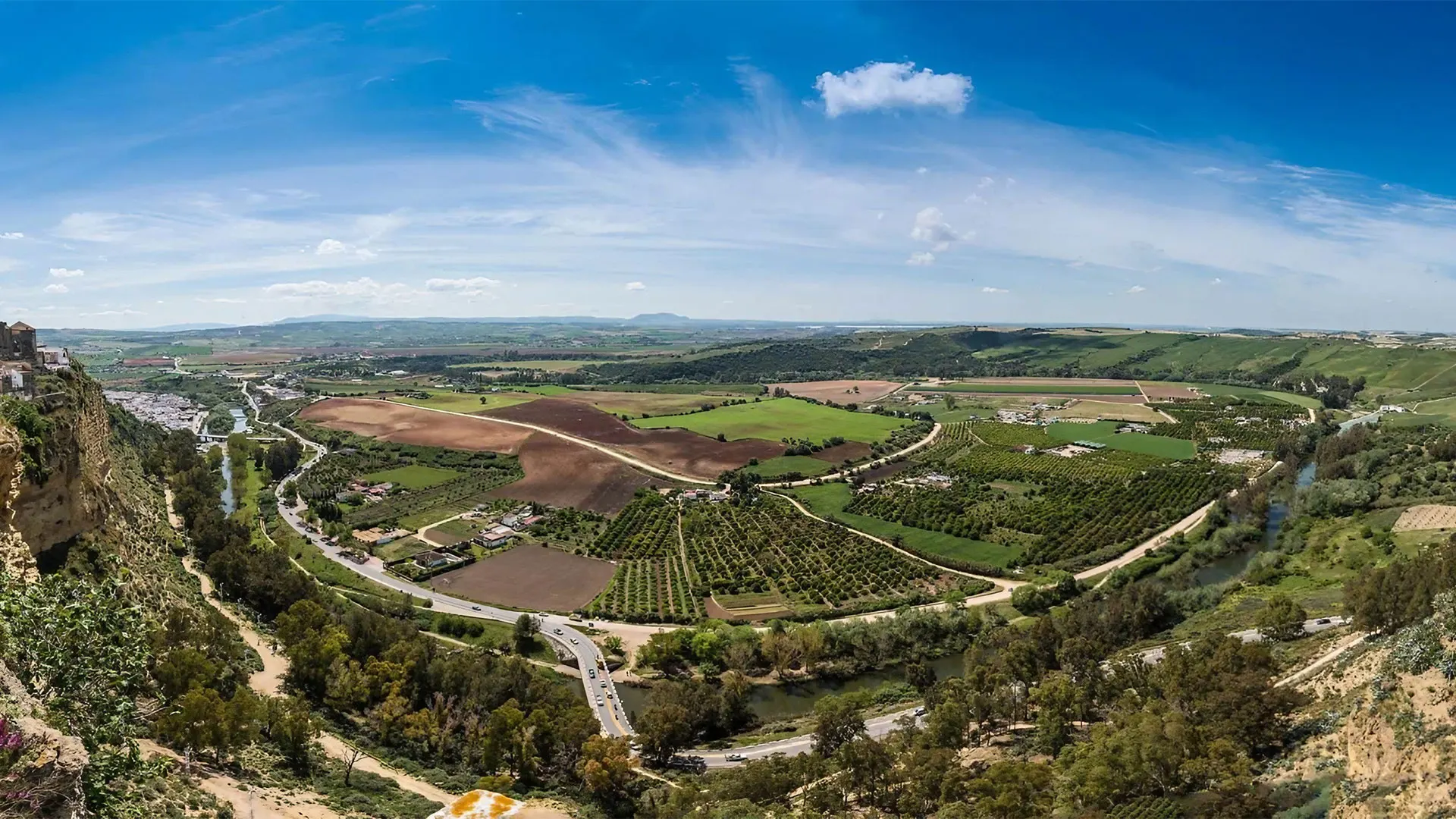
Manni Coe is currently leading one of TOMA & COE’s bespoke photography tours through Barcelona and the surrounding Catalan landscape, where the focus is not only on the city’s celebrated landmarks but on the interplay between light, architecture, landscape and place.
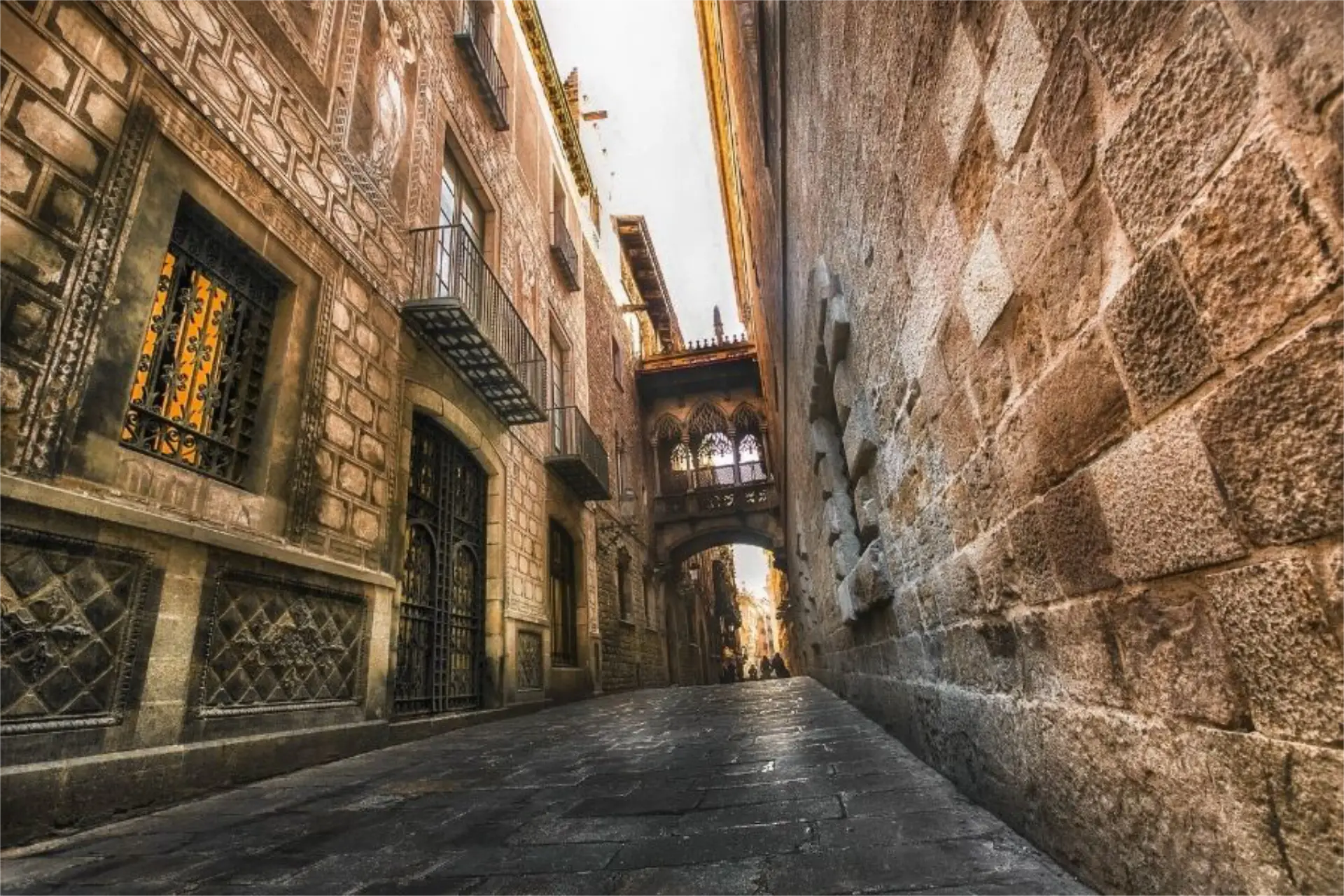
From the shifting reflections on the Mediterranean to the shadowed alleys of the Gothic Quarter and the sculptural forms of Gaudí’s buildings, the tour explores how natural and man-made landscapes shape one another. It is this slower, more observant approach to travel that reveals Barcelona as far more than a collection of famous monuments.
Reading the city through its architecture
Barcelona is often introduced through a single name: Gaudí. His fantastical façades and impossible geometries have become shorthand for the city itself, reproduced endlessly on postcards and guidebooks. Yet to understand Barcelona architecturally is to look beyond the singular genius and recognise a city composed of many centuries, each leaving its own mark of stone, ornament, proportion and urban form.
What makes Barcelona exceptional is not merely the presence of masterpieces, but the coexistence of radically different architectural traditions within a remarkably walkable landscape. Roman foundations survive beneath medieval streets; Gothic churches stand beside Modernista apartment houses; rationalist interventions punctuate a city otherwise defined by exuberant decoration. Barcelona is less a museum than a palimpsest, where one era is continually written over another without entirely erasing what came before.
For photographers, historians and attentive travellers alike, this layered quality is the city’s greatest reward.
The Gothic Quarter
The Barri Gòtic is often imagined as a perfectly preserved medieval quarter, though much of what visitors see today is the result of careful restoration and, in some cases, early twentieth-century reconstruction. Even so, the district retains the spatial logic of the medieval city: narrow streets, irregular plots, sudden squares and buildings that seem to grow organically from the stone beneath them.
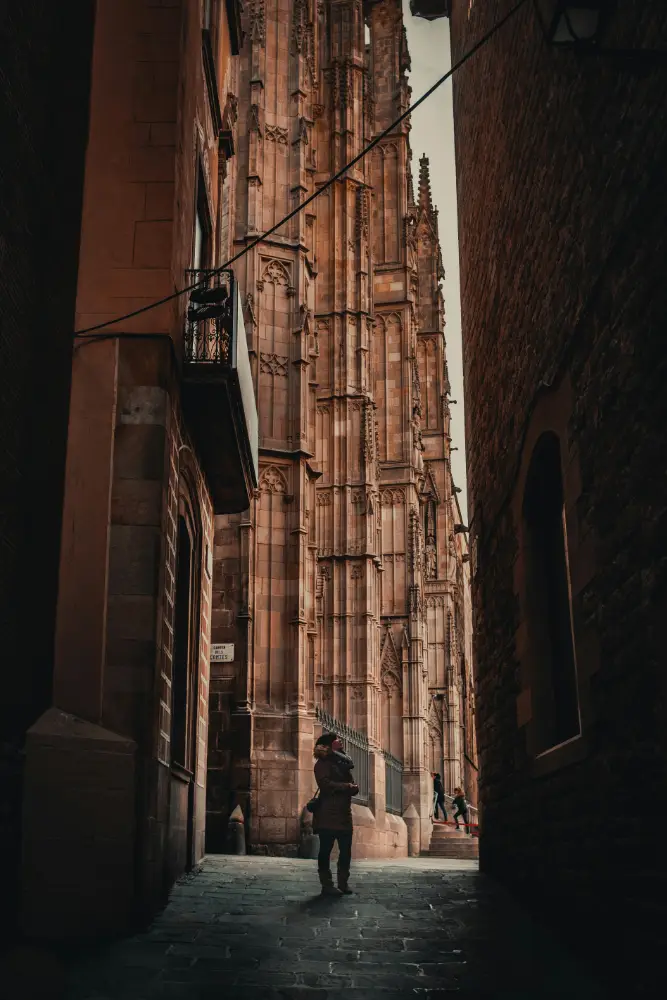
At its heart stands the Cathedral of the Holy Cross and Saint Eulalia, begun in the thirteenth century and completed centuries later. Its soaring verticality belongs to the Catalan Gothic tradition, which differs subtly from the Gothic of northern Europe. Where French cathedrals emphasise height and elaborate sculptural programmes, Catalan Gothic tends toward greater spatial unity, wider naves and a more restrained decorative language.
Nearby, the Basilica of Santa Maria del Mar offers perhaps the purest expression of this regional style. Built largely between 1329 and 1383, it was financed by merchants and shipbuilders rather than by monarchy or bishopric. The result is a church of extraordinary clarity: slender octagonal columns, minimal visual obstruction and a sense of luminous openness that feels almost modern.
The Gothic Quarter is not simply picturesque. It is a record of Barcelona’s rise as a Mediterranean trading power, when architecture served civic identity as much as religious devotion.
The Eixample and the Modernista revolution
In the nineteenth century, Barcelona burst beyond its medieval walls. The engineer Ildefons Cerdà proposed the Eixample, a rational grid of octagonal blocks designed to improve light, ventilation and social equality. The plan was profoundly modern in its urban thinking, yet the architecture that soon filled these blocks became anything but austere.
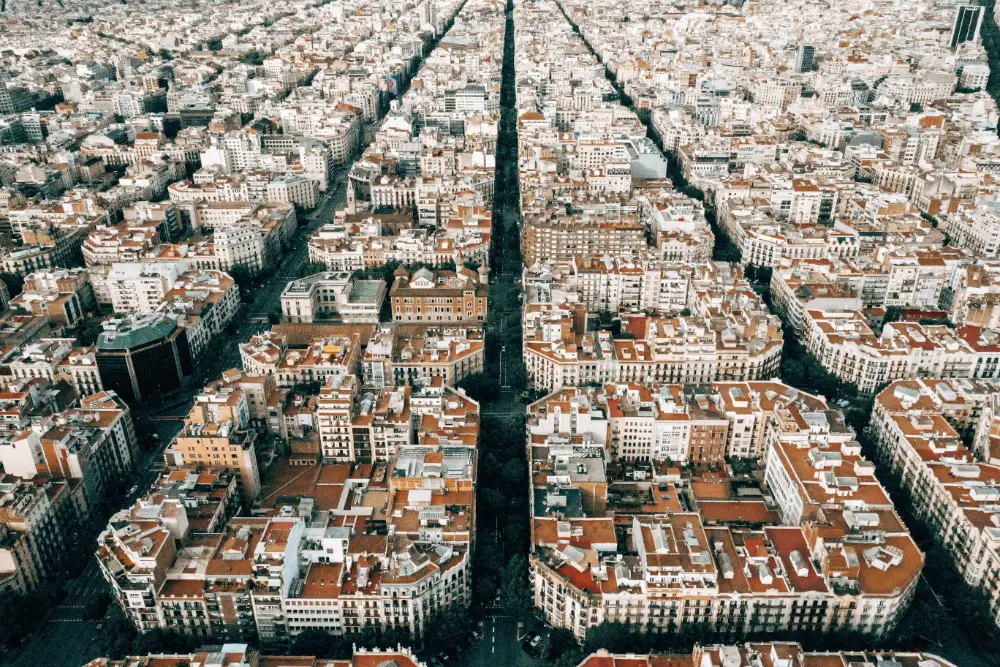
The Catalan Modernisme movement emerged in this new district, fuelled by industrial wealth and a desire to express a distinct Catalan cultural identity. Architects such as Lluís Domènech i Montaner, Josep Puig i Cadafalch and Antoni Gaudí transformed apartment houses into works of total art, integrating sculpture, stained glass, wrought iron, ceramics and furniture into unified compositions.
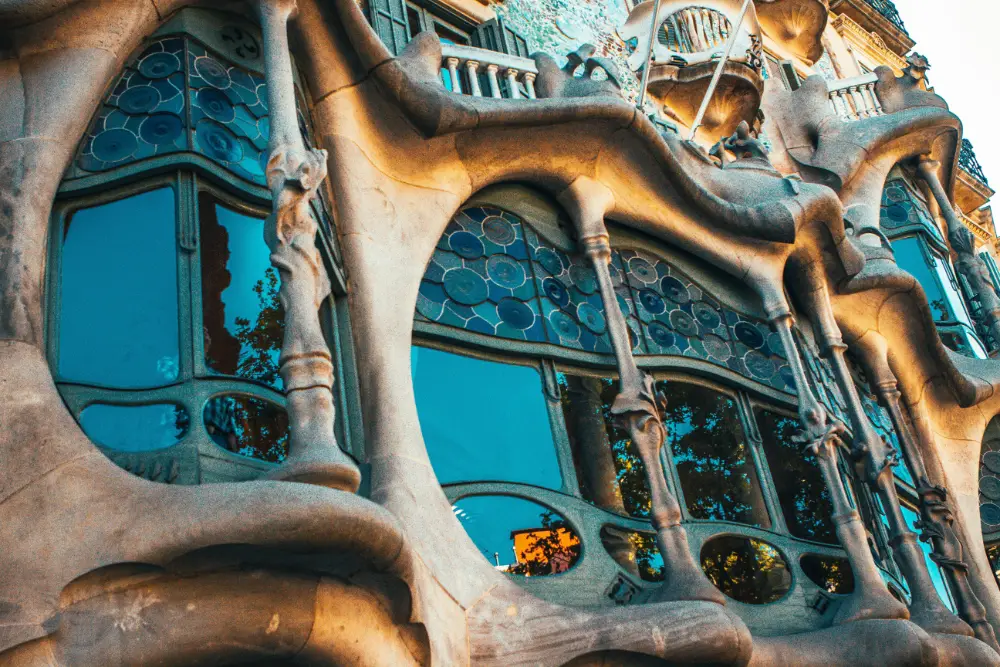
On Passeig de Gràcia, the famous “Block of Discord” presents three competing visions of Modernisme. Puig i Cadafalch’s Casa Amatller draws on Northern European Gothic and Flemish precedents; Domènech i Montaner’s influence appears in richly ornamented, structurally sophisticated designs elsewhere in the district; and Gaudí’s Casa Batlló dissolves conventional architecture into a surface that seems to ripple like water.
Gaudí: the sensuous and the sacred
Gaudí is frequently described as whimsical, but whimsy is the least interesting aspect of his work. His buildings are rooted in rigorous structural experimentation and a close study of natural forms. He observed how trees branch, how bones distribute stress, how shells curve and how light filters through forests. These observations became architectural principles rather than decorative motifs.
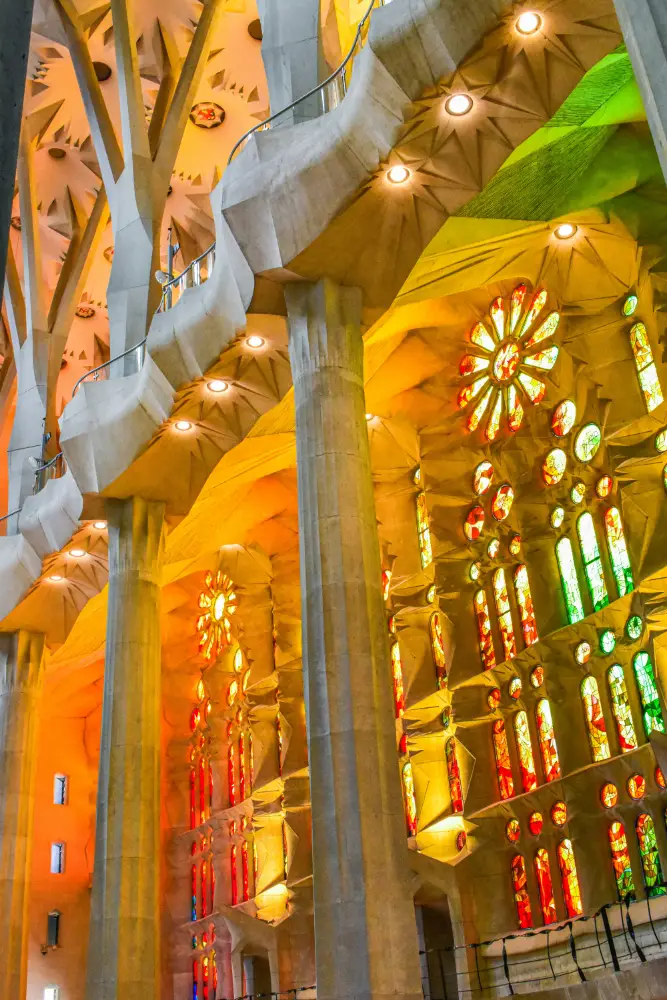
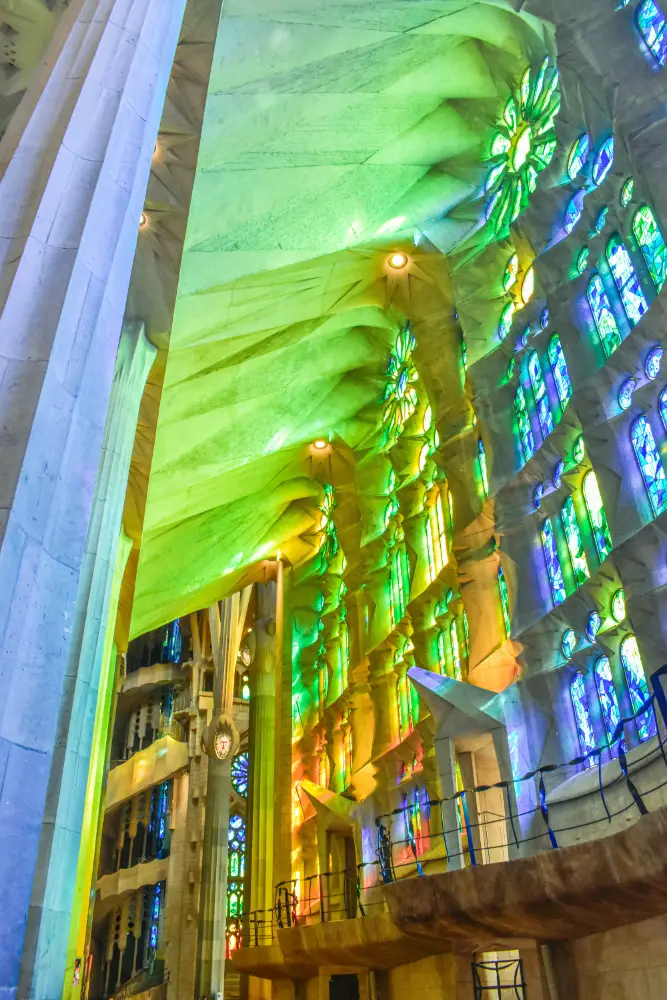
The Sagrada Família is the culmination of this thinking. Its interior does not imitate a forest; it behaves like one. Columns branch into smaller supports, distributing loads efficiently while creating a canopy of stone. Light enters through coloured glass in carefully calibrated gradients, changing throughout the day and giving the space a temporal dimension that photographs can only partially capture.
In Casa Milà (La Pedrera), the undulating stone façade is often the first thing visitors notice, yet the building’s innovation lies equally in its flexible floor plans and structural system, which reduced the need for load-bearing walls. The rooftop chimneys, sculptural and enigmatic, demonstrate Gaudí’s refusal to separate utility from artistic expression.
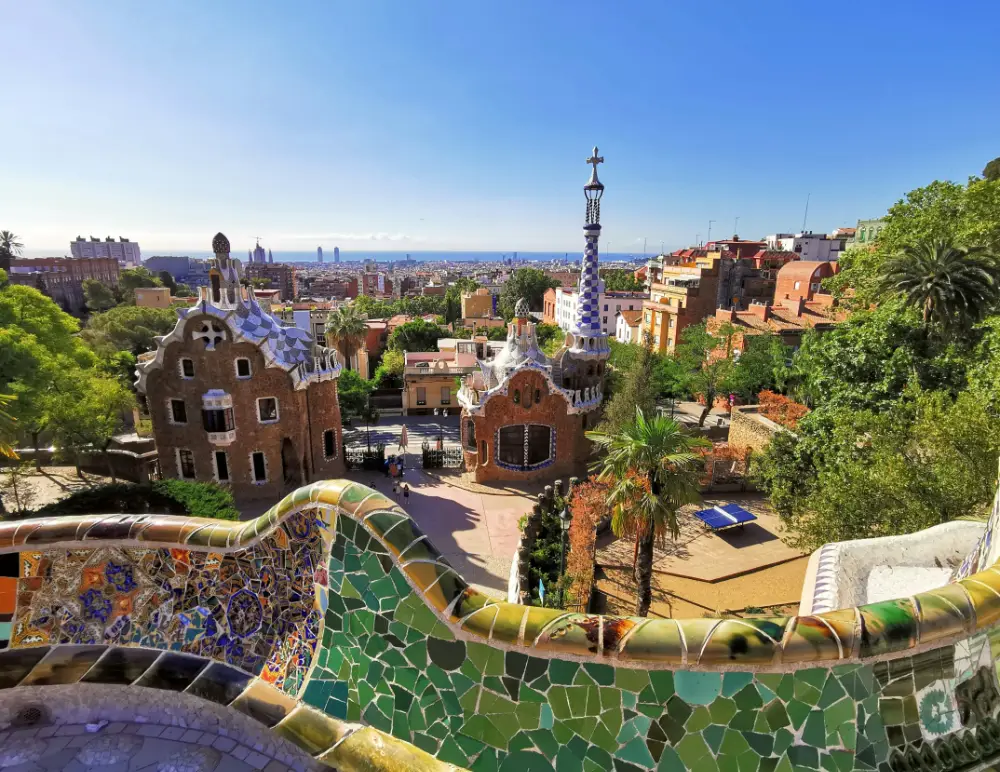
Park Güell, meanwhile, reveals his interest in landscape architecture. Viaducts, terraces and retaining structures are integrated with the hillside rather than imposed upon it. The famous mosaic surfaces, created using broken ceramic fragments, embody a principle of transformation: discarded materials reassembled into new beauty.
Gaudí’s achievement was not to reject tradition, but to absorb Gothic structure, Islamic geometry, craft traditions and natural observation into a language that remains uniquely his own.
Beyond Gaudí: Other voices of Catalan modernity
A high-brow appreciation of Barcelona requires resisting the temptation to let Gaudí eclipse his contemporaries.
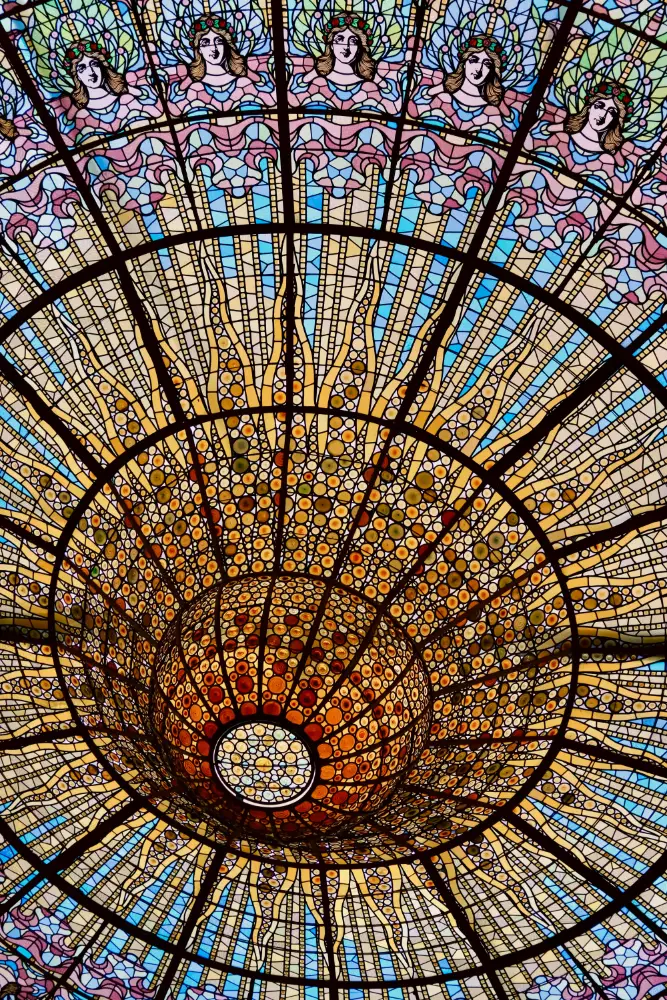
Domènech i Montaner’s Palau de la Música Catalana is one of the great interiors of Europe, a dazzling synthesis of structure and ornament in which steel, glass and sculpture achieve remarkable harmony. His Hospital de Sant Pau applies Modernista ideals to healthcare, creating a complex of pavilions surrounded by gardens and connected by underground passages.
In the twentieth century, Barcelona also embraced architectural modernism in a different sense. The Barcelona Pavilion by Ludwig Mies van der Rohe, reconstructed on its original 1929 site, represents the opposite pole from Gaudí’s exuberance. Here, space is defined by planes, reflections and proportion rather than ornament. Travertine, marble, glass and steel create an architecture of precision and restraint.
Architecture and the Mediterranean light
What binds these diverse architectures together is the Mediterranean light. Barcelona’s buildings are not experienced in isolation from their atmosphere. The pale stone of the Gothic churches absorbs morning light softly; Modernista ceramics ignite under the afternoon sun; the sea reflects brightness upward into façades and courtyards.
For photographers, this is why timing matters as much as location. Shadows reveal structure; oblique light exposes texture; reflections animate glass and tile.
This sensitivity to light is central to the way TOMA & COE approaches travel. Rather than moving rapidly from monument to monument, our journeys are designed around observation: returning to places at different hours, understanding how landscape shapes architecture, and allowing time for the unexpected frame that appears only when one lingers.
A city best read slowly
Barcelona can be admired superficially in a weekend, yet its deeper character emerges through slower exploration: tracing Roman walls beneath medieval houses, comparing the spatial logic of Santa Maria del Mar with the theatricality of the Palau de la Música, watching evening light slide across the stone of Montjuïc.
For those interested in architecture, photography, history or simply the art of seeing well, Barcelona offers an experience that extends far beyond tourism. It is a city that teaches the eye to recognise continuity within change, and to find beauty not only in famous landmarks but in the relationships between street, stone, shadow and sky.