Every province, sometimes every kitchen, has its own version of the classics
Andalucía is not a region with one cuisine. Its eight provinces have spent centuries disagreeing, amicably, about how a handful of the same ingredients — tomatoes, bread, olive oil, potatoes, fish, eggs — should end up on a plate. Nowhere is this clearer than in the region’s cold soups, its most famous omelette, and its fried fish, each of which comes in several competing, fiercely defended versions. There’s even a borrowed dish, paella, that’s picked up a local disagreement or two of its own. We explain away the food variations, so you know what you’re ordering.
Gazpacho, salmorejo and porra: the cold soup family
The three share the same ancestry — stale bread, ripe tomatoes, garlic and Andalucían olive oil, blended cold as a way of using up what the larder had and the heat hadn’t spoiled. From there, each province took the idea somewhere different.
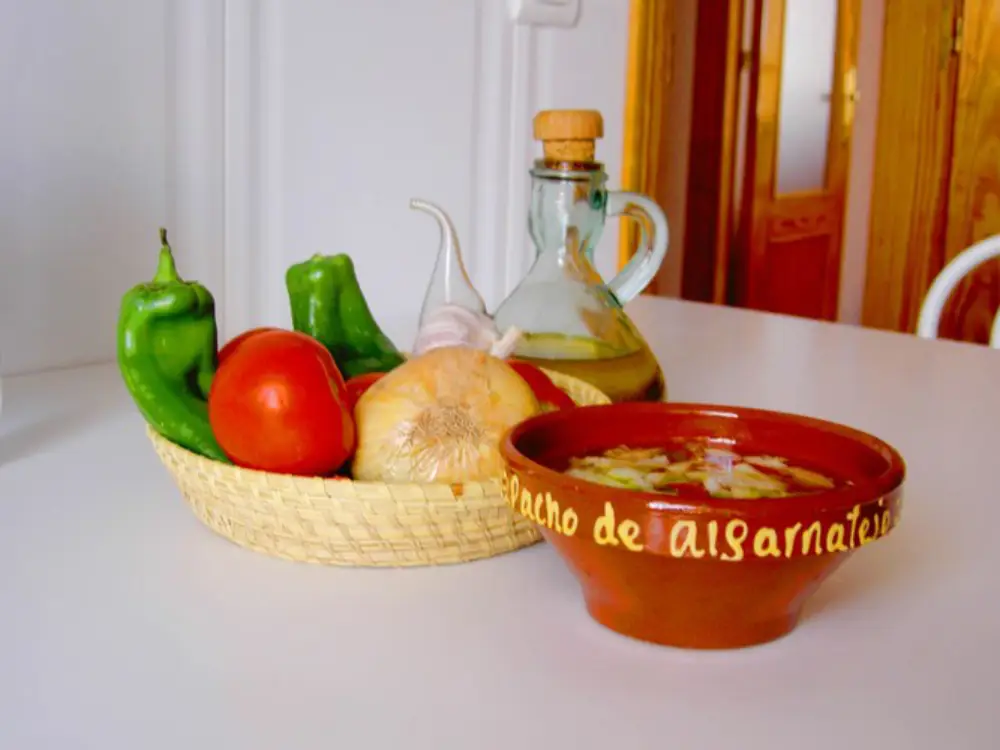
Gazpacho is the one most visitors already know: thin enough to drink, built with cucumber and green pepper alongside the tomato, and sharpened with a proper hit of vinegar. It arrives in a glass as often as a bowl, usually with a scattering of peppers and cucumber on the side rather than stirred through.
Salmorejo belongs to Córdoba and takes the opposite approach. No cucumber, no pepper, considerably more bread, and it’s emulsified until almost thick enough to hold a spoon upright — closer to a chilled velouté than a soup. Traditionally it’s finished with hard-boiled egg and diced jamón over the top, which turns it into something you’d happily eat as a light meal rather than a starter.
Porra antequerana goes further still. Antequera‘s version is denser and richer than salmorejo, built with a more generous ratio of oil and barely any vinegar, so the flavour is rounder and less acidic. It’s often served as a proper starter with tuna, egg and olives arranged on top rather than folded in — less a soup, more a spread you eat with a spoon and slightly too much bread.
Read our Guide to Spanish Olive Oil
Tortilla: the onion question
Tortilla de patatas is simple enough in principle — eggs, potatoes, olive oil, a slow hand — and yet it produces the most reliably heated debate in Spanish cooking: con cebolla or sin cebolla, with onion or without. This isn’t an Andalucían quirk so much as a national fault line that runs straight through the region’s kitchens, family tables and, on occasion, family arguments.
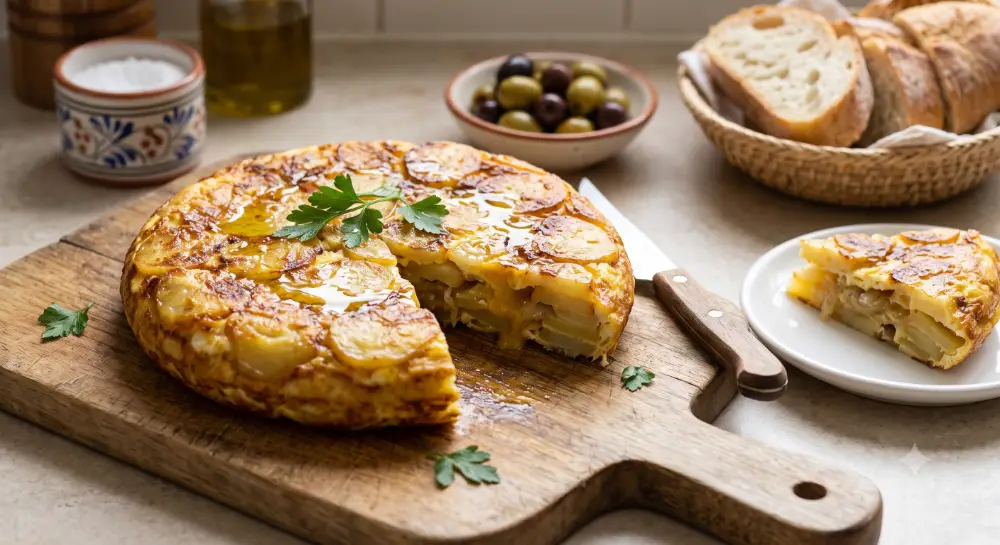
With onion, the tortilla is softer and sweeter, with more moisture running through it as the onion breaks down slowly in the oil alongside the potato. Slice it and the layers slump slightly rather than holding a clean edge.
Without onion, the potato flavour stands alone, the texture is firmer and the slice holds its shape — which purists on this side of the debate will tell you is precisely the point of a tortilla de patatas: patatas, not cebolla.
There’s no national consensus and there’s not likely to be one!
Pescaíto frito: fried fish and its coastal borders
Fried fish is a given the length of the Andalucían coast, but ask where it’s done best and you’ll open up the region’s most good-natured maritime rivalry. The principle is the same everywhere — small fish, a light dusting of flour, a hot pan of olive oil, eaten within minutes of leaving it — but the details that separate a decent fritura from a memorable one shift from bay to bay.
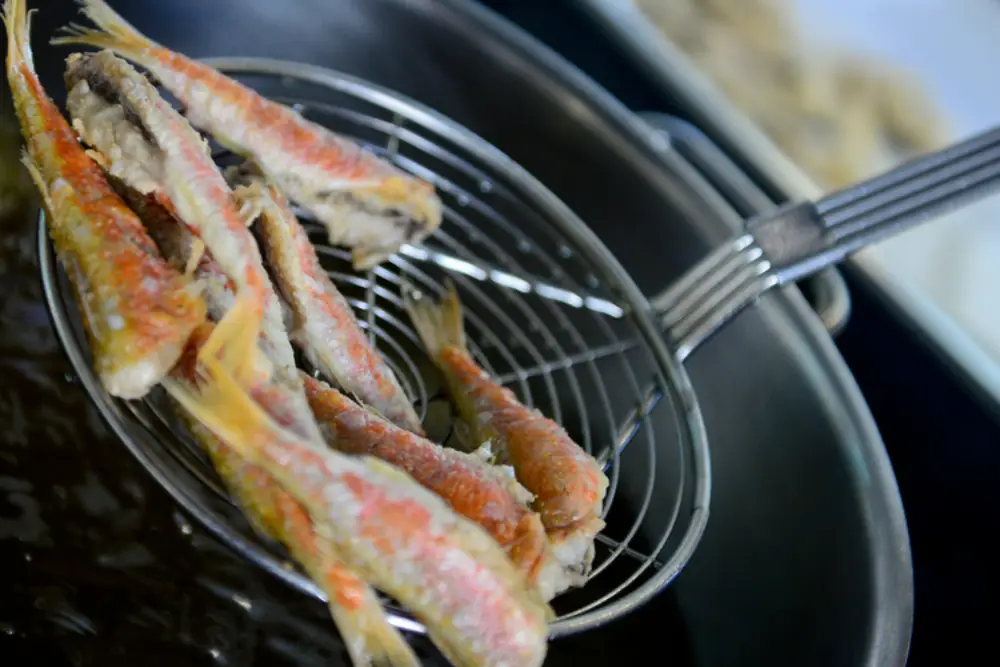
Cádiz, and El Puerto de Santa María in particular, is where most Andalucíans will point you first. The flour here tends to be finer, sometimes cut with chickpea flour for a lighter, crisper coating, and the variety on the plate is the real draw — acedías (baby soles), chocos (cuttlefish) and puntillitas (baby squid) alongside the usual boquerones. They are often served together as a proper fritura variada rather than a single fish done well.
Málaga builds its version around the boquerón, the small anchovy that gives Málaga’s fritura its identity — fried whole, bones and all, eaten in a couple of bites.
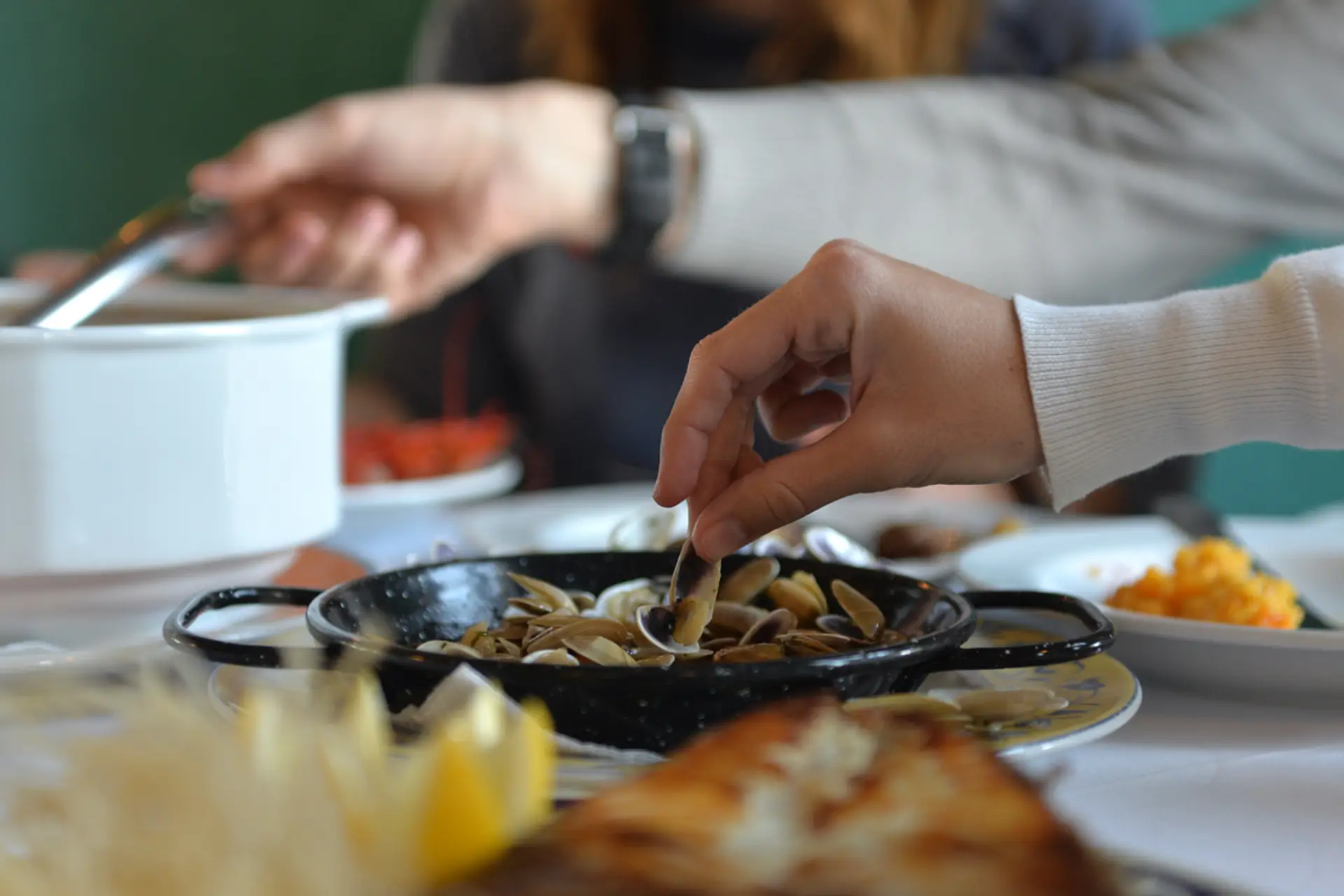
Huelva and the Atlantic coast, up from Cádiz, the locals lean on what the ocean rather than the Mediterranean provides — coquinas (tiny clams) and choco frito feature more heavily here. The batter is often left slightly thicker here to stand up to the bigger cuts of fish that the Atlantic brings in.
The adopted one: paella (to pea or not to pea?)
Paella isn’t Andalucían by birth, it belongs to Valencia, several hundred kilometres up the coast. However, it’s eaten across this region as readily as anywhere else in Spain, which means it’s picked up its share of opinions along the way. And the horror with which a paella purist recoils when espying a pea amongst the rice, says it all!
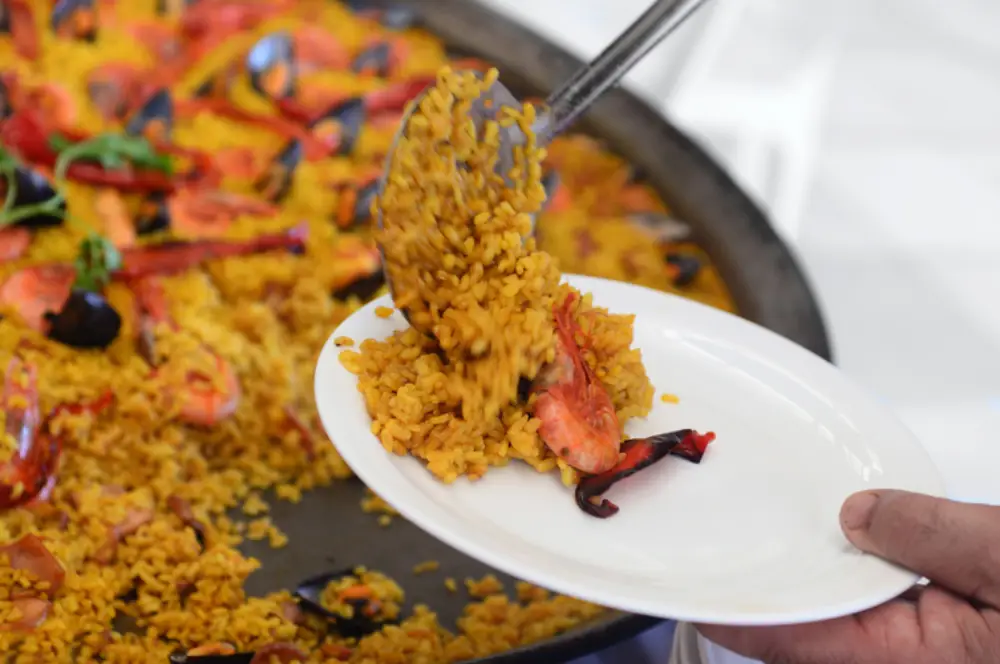
A paella Valenciana, by the original recipe, contains no peas at all — chicken, rabbit, flat green beans, garrofón beans, tomato, saffron, rice, and not much else. Peas arrived later, as restaurants and home cooks reached for whatever was to hand or looked good on the plate, and they’ve since become close to standard in the mixed and seafood versions served across Andalucía and much of the rest of the country. Ask a purist and you’ll get a firm objection. Ask most Andalucían kitchens and they’ll shrug and add a handful anyway.
Why it’s worth knowing before you travel
None of this is trivia for its own sake. Knowing that a Córdoba salmorejo isn’t a badly made gazpacho, that an Antequera porra isn’t a heavier version of the same idea helps you plan your meal. Understanding that a Cádiz fritura and a Málaga boquerones are two different traditions, changes how you order and what you’ll enjoy.
It’s the same principle behind travelling with a local guide rather than a guidebook: the difference between a dish and its neighbouring version is usually a story about a particular town, a particular harvest, or a particular grandmother who did it her way.
On our Andalucía tours, gastronomy is never an afterthought bolted onto the sightseeing. Local cuisine is one of the clearest ways into the character of each city, and our guides will happily steer you toward whichever version of each dish their province does best.
But let’s start our own tortilla debate – are you con cebolla (with onion) or sin cebolla (without onion)? Personally, I’m voting ‘con cebolla’.