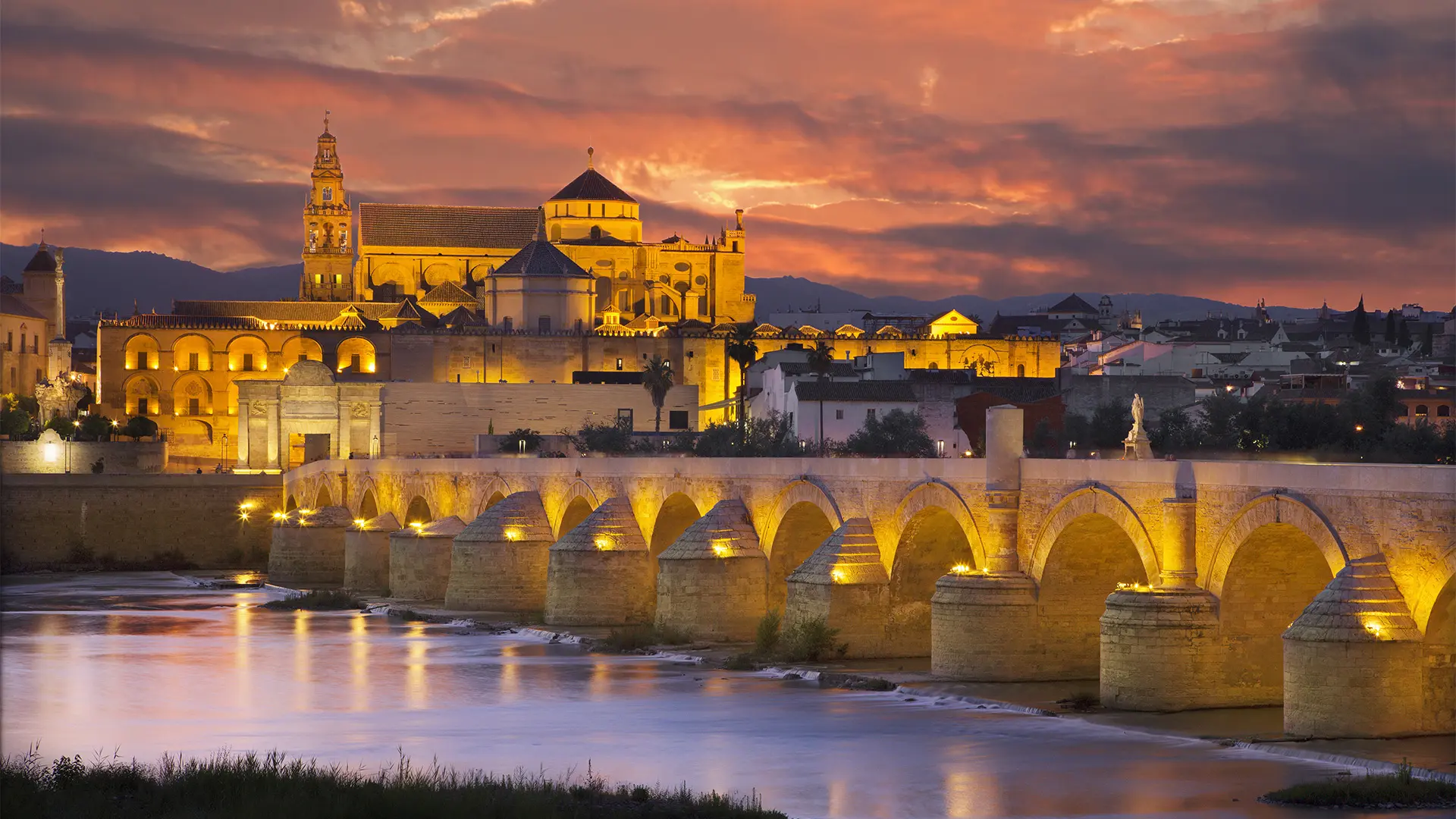
Córdoba has been rebuilt by multiple civilisations. Roman, Visigothic, Umayyad, and Christian rule have each left their mark in river crossings, winding streets, colourful patios and, of course, the Mezquita-Catedral. Here a Visigothic church became a mosque, and that mosque later had a Renaissance nave built through its centre.
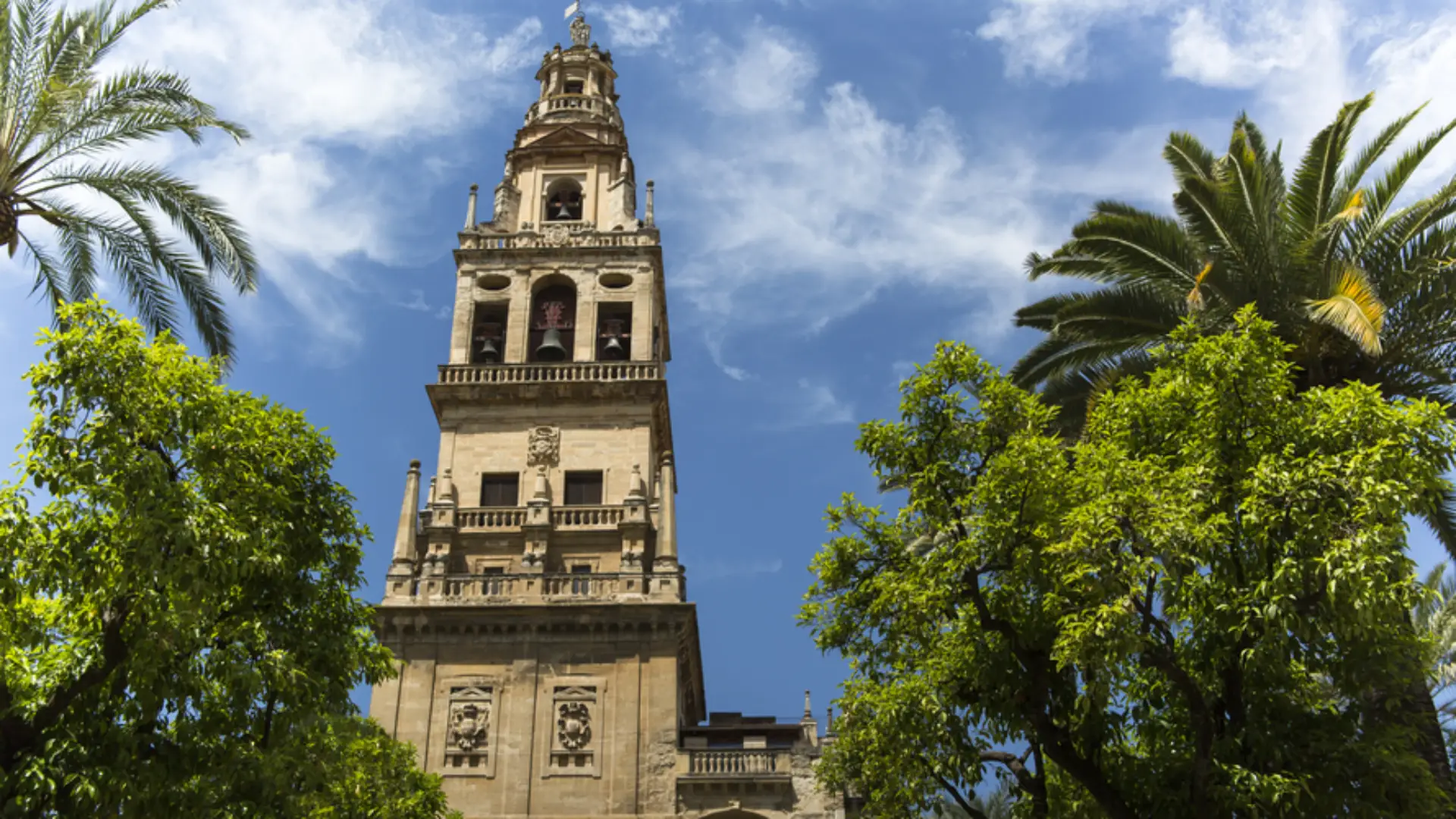
The site was originally home to a Visigothic church, itself built on the remains of a Roman temple. After the Umayyad conquest of the Iberian Peninsula in 711, Muslims and Christians shared the building for over 70 years. In 784, the emir Abd al-Rahman I bought out the Christian half, demolished the existing structure, and began construction of a new congregational mosque.
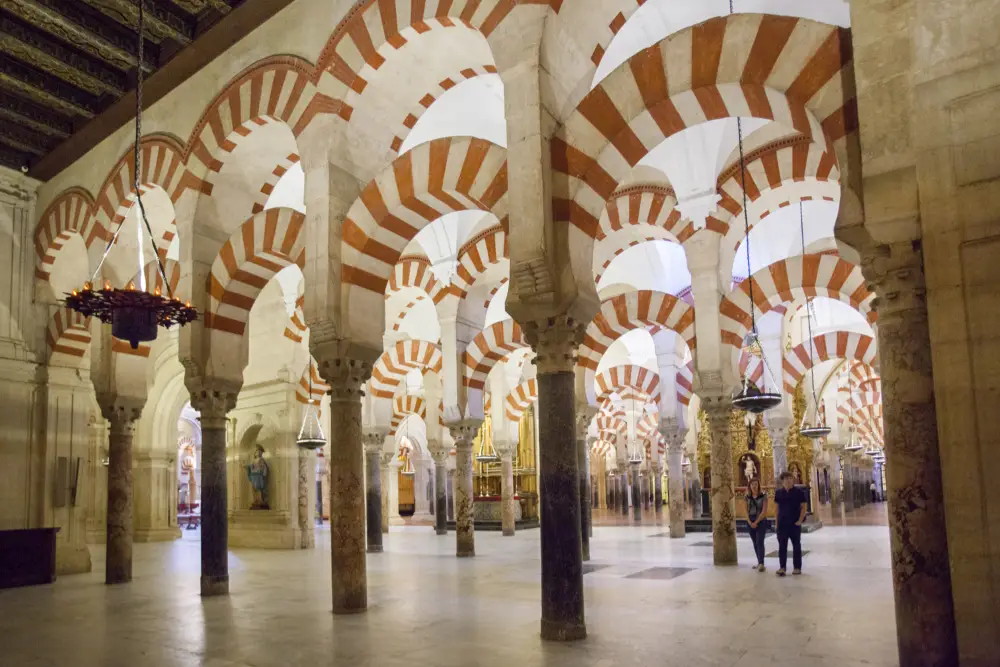
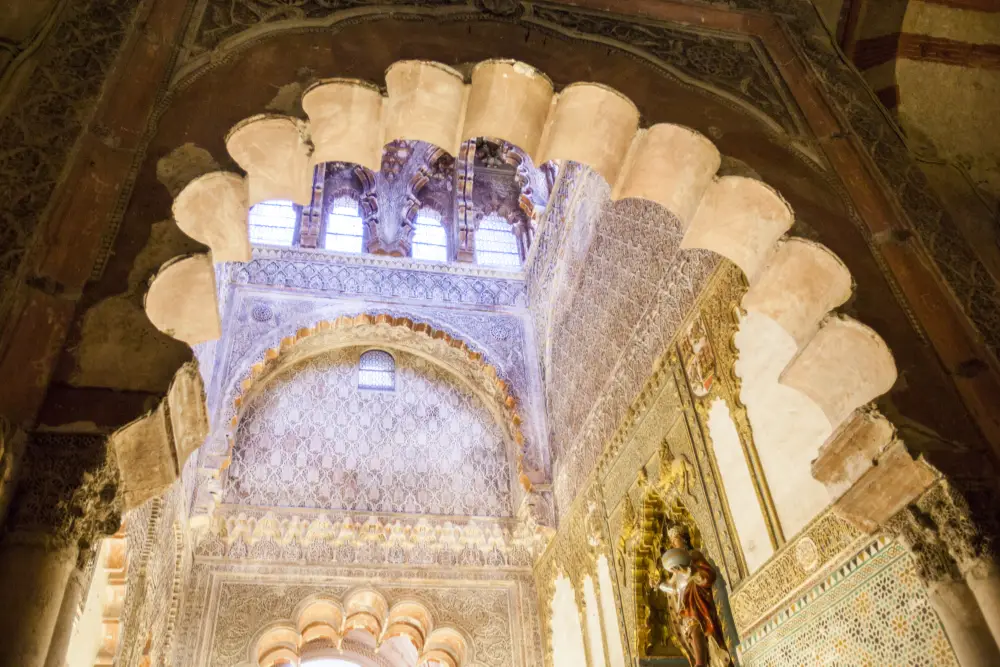
The mosque grew in three later phases. Abd al-Rahman II extended it in the 9th century. Al-Hakam II enlarged it again in the 960s and commissioned the mihrab, its mosaic decoration carried out by craftsmen sent from Byzantium at his request. The final expansion, under Almanzor in 987, brought the building to its current footprint — around 23,000 square metres, with more than 850 columns supporting double-tiered horseshoe arches in alternating red brick and white stone. Many of the columns were reused from Roman and Visigothic buildings elsewhere in the region, which is why no two are quite alike.
Inserting the Cathedral
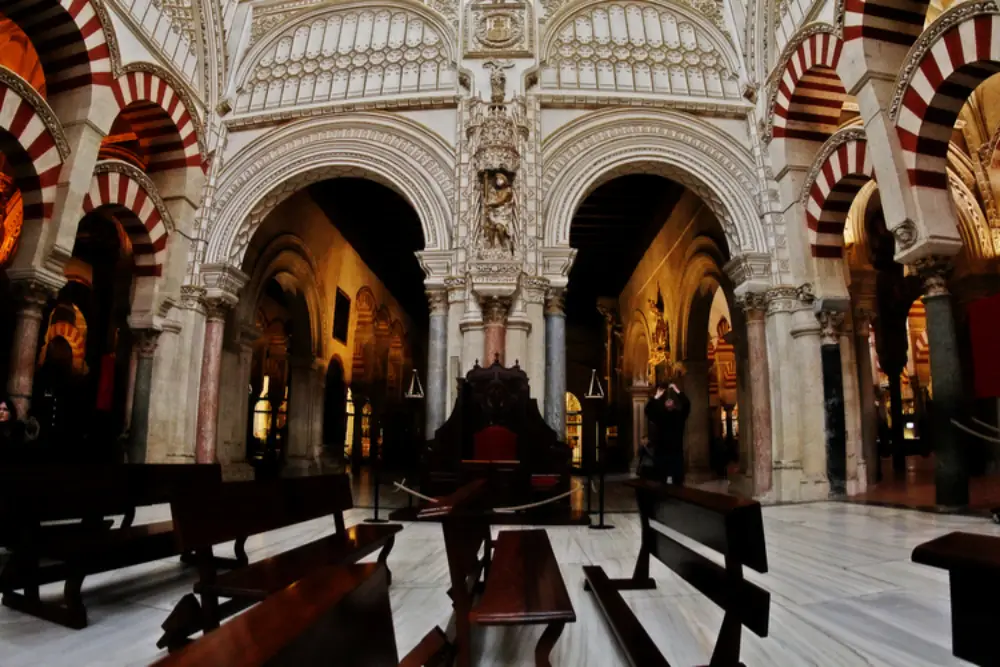
Córdoba fell to Ferdinand III of Castile in 1236. The mosque was consecrated as a cathedral almost immediately, but for nearly 300 years the Christians made only minor alterations — small chapels along the outer walls, the minaret converted into a bell tower. The hypostyle hall itself was left standing.
That changed in the 1520s, when Córdoba’s cathedral chapter petitioned Charles V for permission to build a full Renaissance nave and transept through the centre of the building. The city council opposed the plan and asked Charles V to block it. He sided with the chapter instead, and construction went ahead, cutting through existing columns and arches to make room for the new structure.
Charles V visited Andalucia in 1526 following his marriage to Isabella of Portugal in Seville. Whilst historians will point out that there is no documented evidence that the king visited the city, let alone, the mezquita, there is a quote popularly attributed to him.
“You have built what you can find anywhere, but you have destroyed what was unique in the world»
The Mezquita today
The Mezquita-Catedral remains an active Catholic cathedral, with regular Mass held inside. Muslim visitors are not permitted to pray there; requests to do so have been made periodically since the early 2000s and consistently declined by the Church. The Diocese of Córdoba registered ownership of the building in 2006, a move the city council has since disputed.
The site was added to the UNESCO World Heritage list in 1984, and today it’s the third most-visited monument in Spain, after the Alhambra and the Sagrada Família.
Cordoba is one of the most popular places to visit in Andalucia and forms one leg of our Classic Andalucia Tour, which also includes Granada (with its Alhambra) and Seville. If you’re already in Andalucia, you might like to take one of our day trips to Cordoba, where you can choose to view the incredible mezquita during the day or evening.