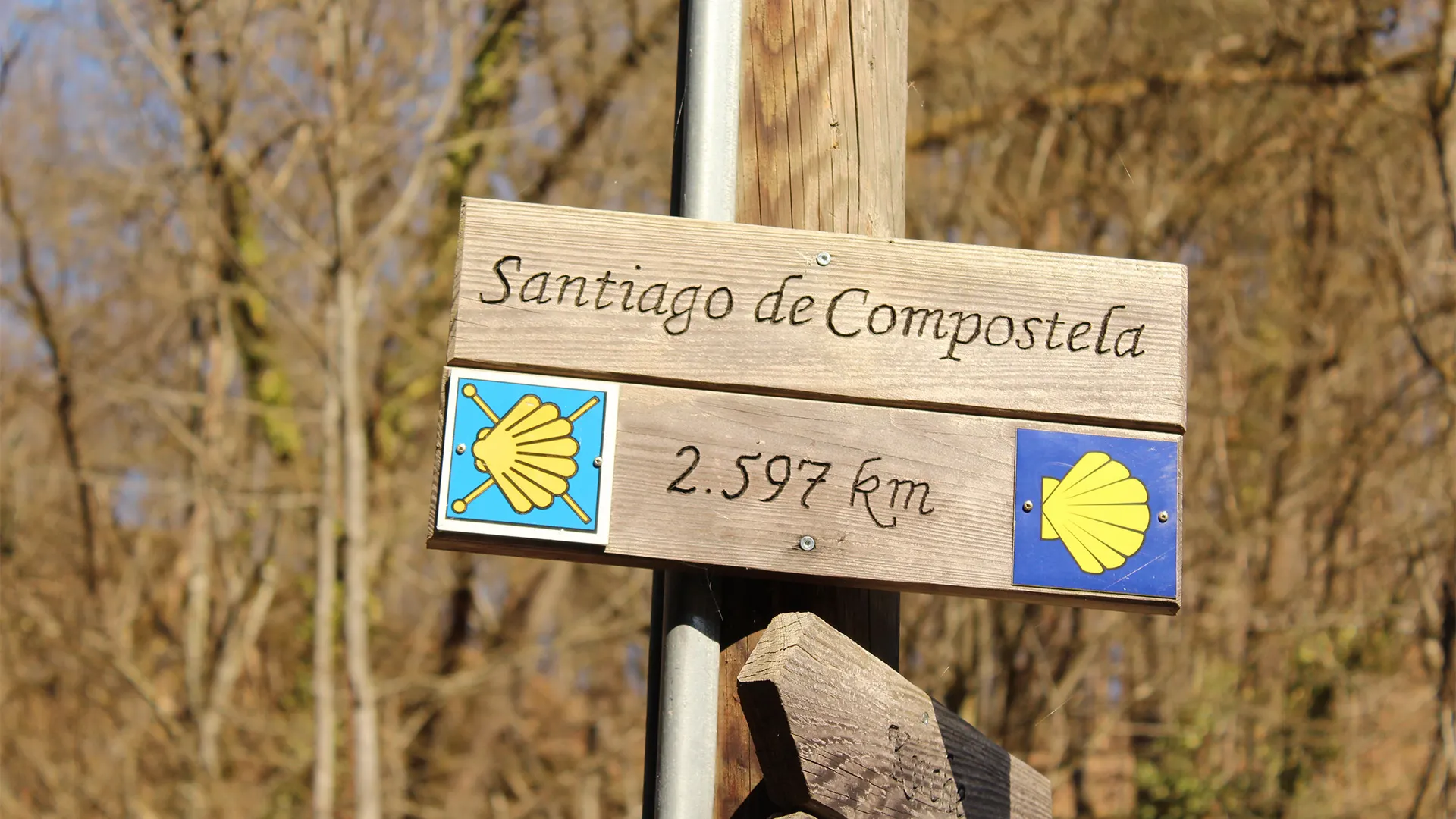
On 14th September 797, Alfonso the Chaste was crowned king of Asturias, a small Christian kingdom clinging to Spain’s northern coast while the Moors held the south. Little in that ceremony suggested it would produce one of Europe’s most enduring travel traditions. But in 814, the discovery of a tomb in a remote Galician forest set off a chain of events shaping one of the most famous Christian pilgrimages.
In the early ninth century, a hermit reported finding the lost tomb of the Apostle St. James (Santiago) deep in the Galician countryside. A local bishop passed the news to Alfonso II in the Asturian capital of Oviedo. The king didn’t send an envoy to verify the claim but headed off himself.
Alfonso II led his party through the steep, fog-bound mountains separating Asturias and Galicia. That path survives today as the Camino Primitivo — the Original Way — still regarded as the oldest and most physically demanding of the Camino routes.
By making that journey, Alfonso II became, by most accounts, the first pilgrim of what would become the Camino de Santiago.
From chapel to Cathedral
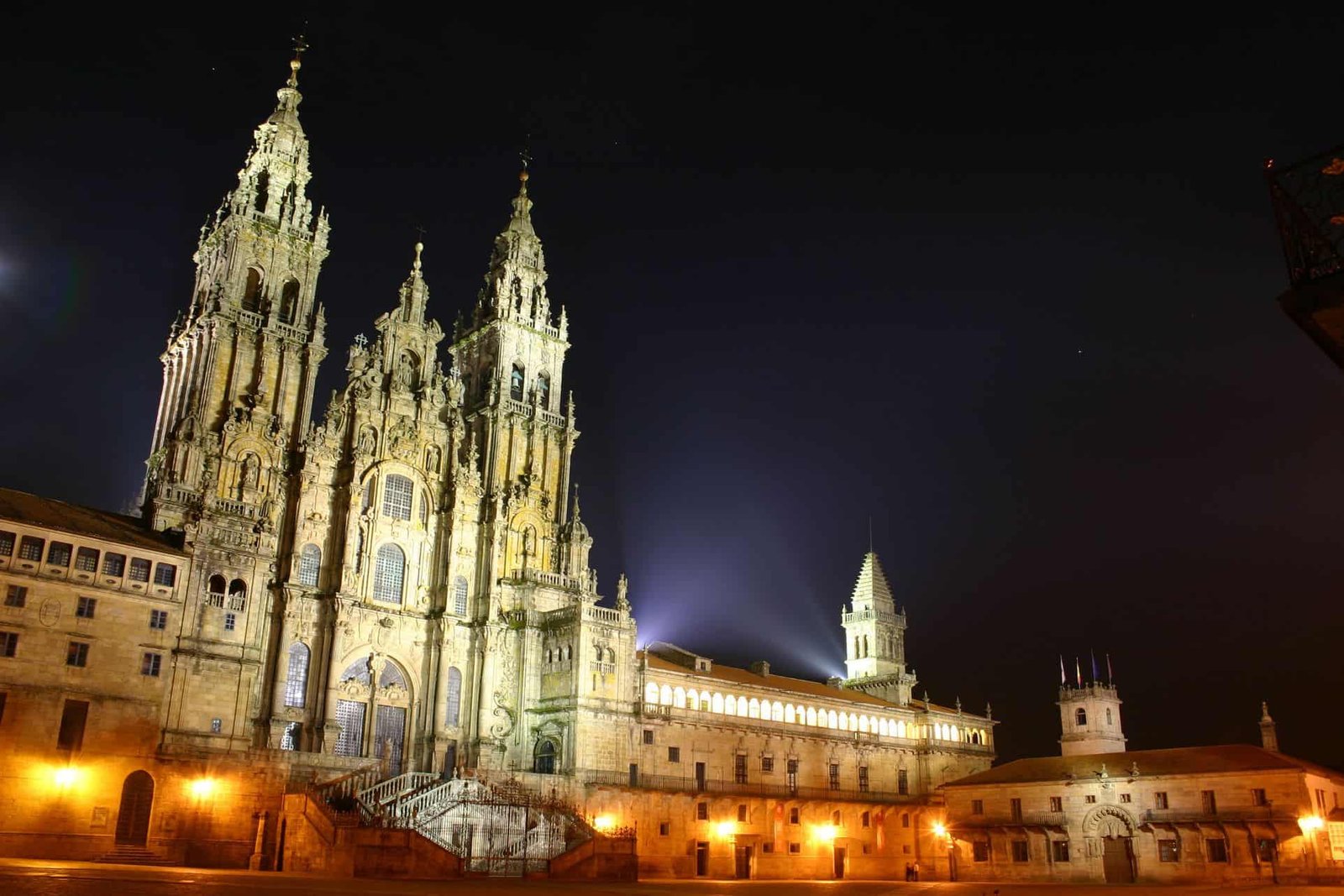
After confirming the remains belonged to Saint James, the King ordered the construction of a church and funded a monastery to care for the holy site.
For the first couple of centuries after Alfonso II’s journey, the Camino Primitivo was the main and safest route for Christian pilgrims heading to Santiago, much of it laid over old Roman roads through the mountains of Asturias and Galicia.
That changed as northern Spain stabilized and the kingdom’s capital moved south to León. Monarchs began promoting the Camino Francés — the French Way — which offered flatter terrain, better infrastructure, bridges, and pilgrim hospitals. The Primitivo, with its steep mountain climbs and fewer towns along the way, saw its traffic decline through the late medieval period in favour of the easier route.
Modern resurgence of the Camino Primitivo
Like other historic trails, the Primitivo fell into centuries of near disuse before a revival took hold in the late twentieth century. Scholars and local clergy, among them Father Elías Valiña Sampedro, worked to clear and mark the old mountain paths with the now-familiar yellow arrows, making the route navigable again for modern hikers. Today it’s protected as part of the wider Way of St. James network and draws hikers specifically looking for its scenery and difficulty.
The Camino Mozárabe
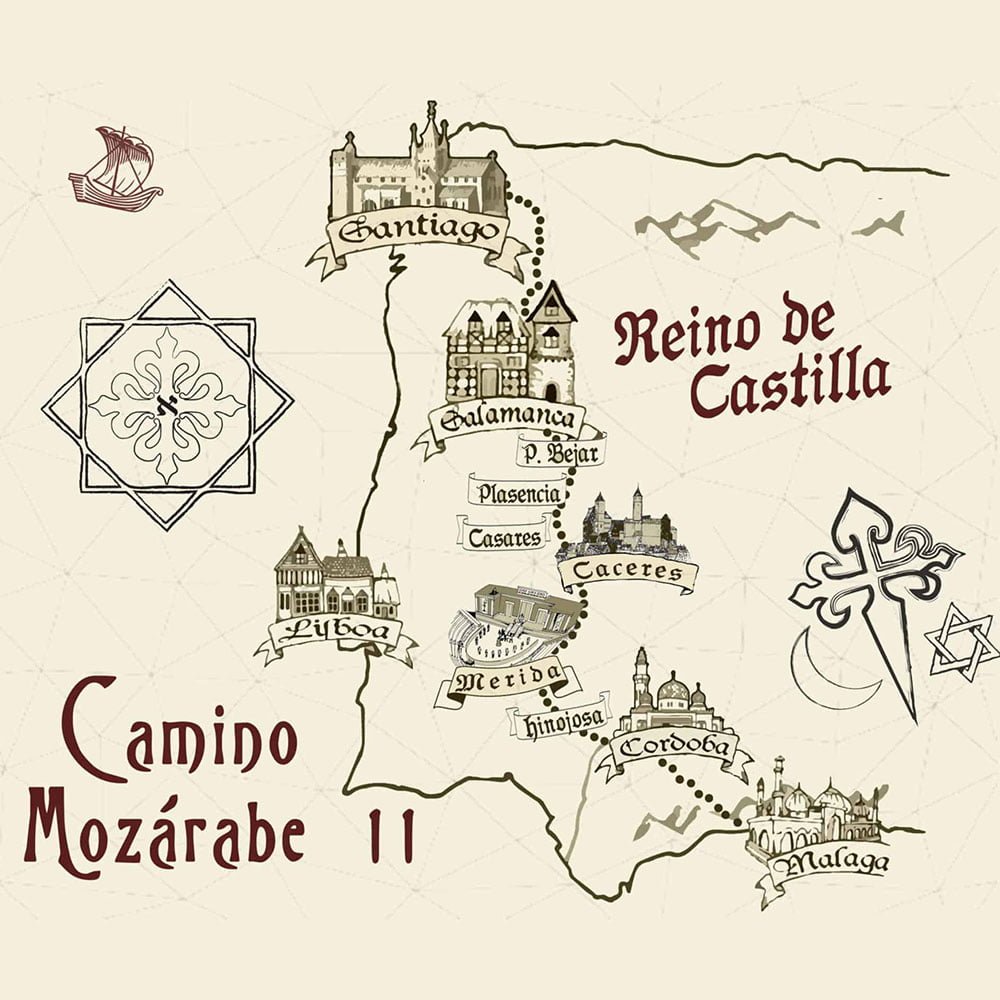
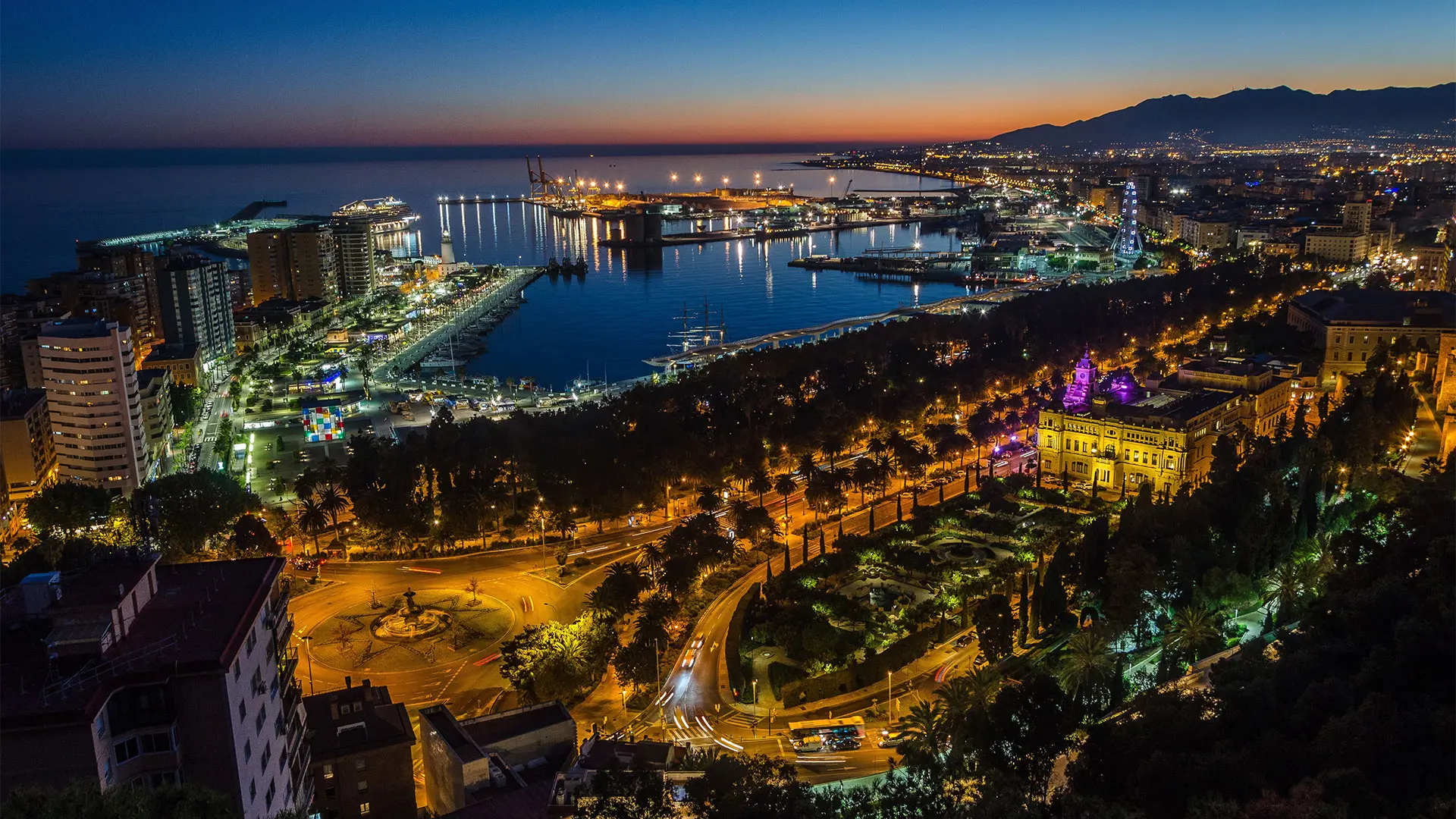
The Camino Mozárabe is a separate branch of the same pilgrimage network, with roots in southern Spain. It originated with the Mozarabs — Christians living under Muslim rule in medieval Al-Andalus — and functions less like a single line than a tree: routes from Almería, Granada, Málaga, and Jaén each run north through Andalucía and converge before linking up with the Vía de la Plata at Mérida, continuing toward Santiago.
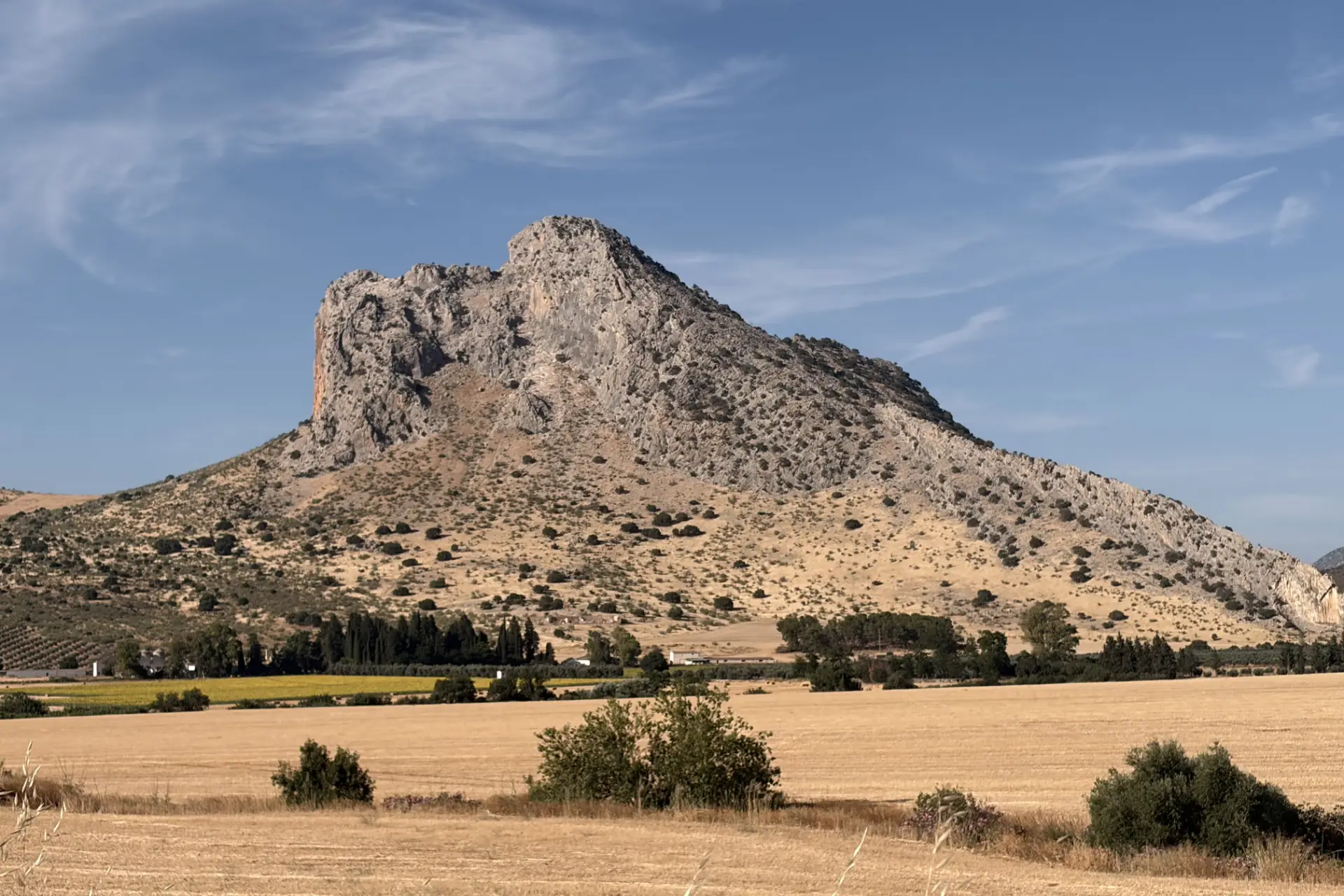
Along the way it passes through the sub-desert landscapes of Almería, the edges of the Sierra Nevada, and rolling stretches of olive groves through Jaén and Córdoba, along with heritage sites including the Alcazaba in Almería, the Alhambra in Granada, and the Mezquita-Cathedral in Córdoba.
TOMA & COE’s Camino Mozárabe tours, including the final 108km stretch into Santiago, follow this southern branch.
After the Camino: Galicia and Asturias
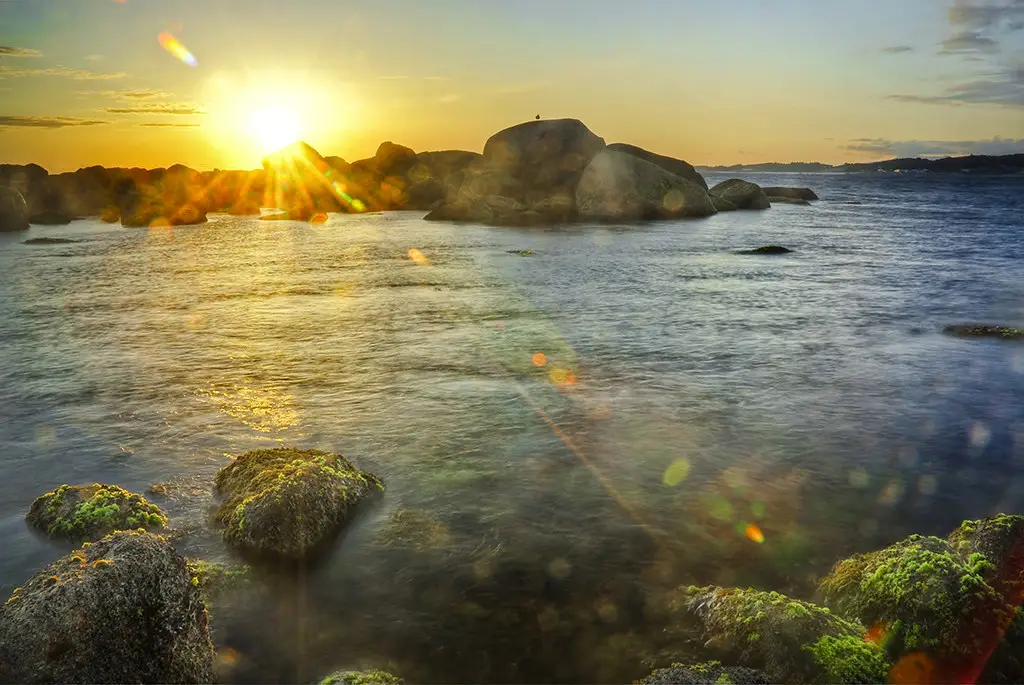
Pilgrims who finish in Santiago are within easy reach of the same landscapes Alfonso II crossed thirteen centuries ago, and the region rewards a few extra days.
Scenery
Galicia’s Rías Baixas, its flooded coastal inlets, combine cliffs, pine forest, and quiet fishing villages. Further east, the Picos de Europa mountains straddle Asturias with limestone peaks, glacial lakes, and the Cares Gorge trail, one of the most scenic walks in northern Spain.
Cuisine
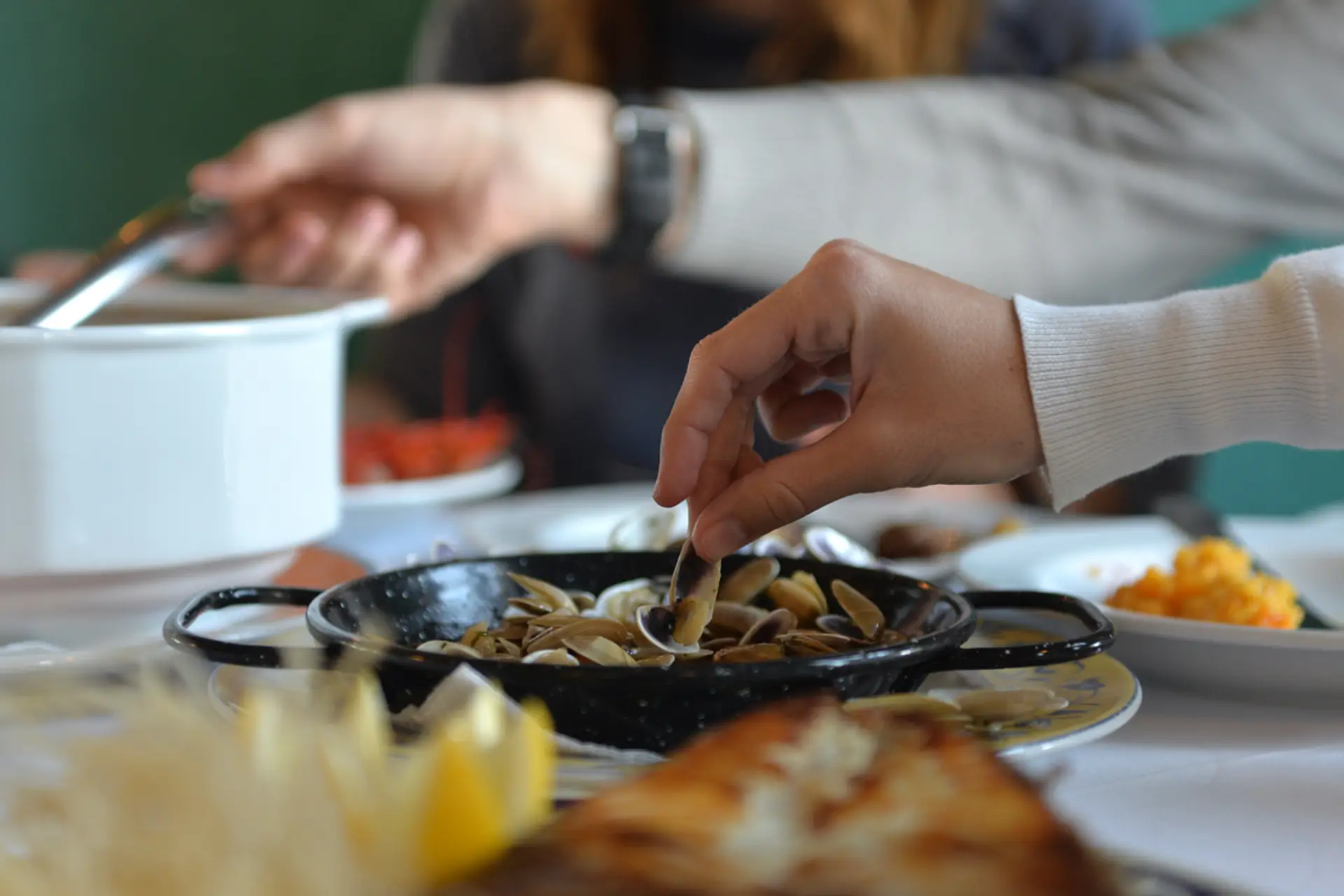
Galicia is known for pulpo a la gallega (octopus with paprika and olive oil), fresh seafood from the Atlantic, and Albariño wine from the Rías Baixas. Asturias brings fabada asturiana (a hearty bean and pork stew), cabrales cheese, and sidra — cider poured from a height to aerate it, traditionally drunk in a sidrería.
Beaches
The Cíes Islands, part of the Atlantic Islands National Park off the Galician coast, hold Rodas Beach, regularly ranked among Europe’s best. In Asturias, Playa de Gulpiyuri is a beach set inland in a limestone sinkhole, connected to the sea by an underground channel, and Playa del Silencio near Cudillero sits beneath dramatic cliffs.
For anyone taking on the Camino Mozárabe with TOMA & COE, extending the trip north into Galicia and Asturias is the perfect end to an incredible experience.
If you’d like to walk along the Camino Mozarabe and add an extra experience to the end, then contact us for your bespoke Camino experience.